
Opinion
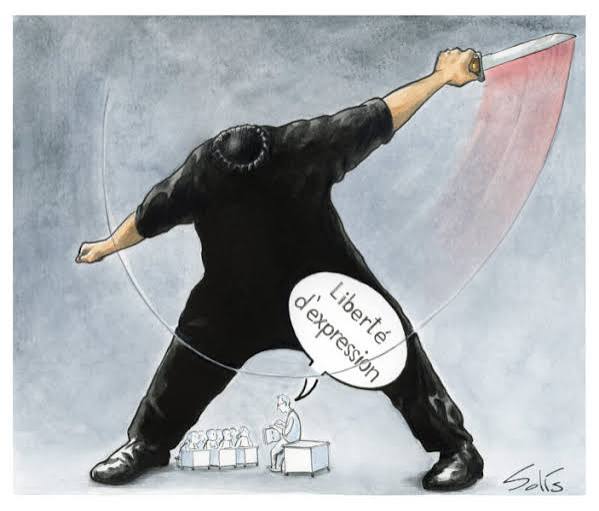
Police Brutality And Democracy

Precisely 69 years ago, the Nigeria Police Force was established with the primary objective for safety of life, security of property and maintenance of law and order in the civil society. The police constable in those days were only armed with a baton, which of course commanded dignity and respect, by the entire citizenry. Frankly, the constable were honest in the discharge of their civic responsibility and thus brought honour to the nation.
In recent times however, due to crime wave increase in the society and in order to squarely combat the crime situation, members of the Nigeria Police were equipped with more sophisticated weapons.
The dehumanization art of the law enforcement agency to the citizenry is a mockery to a democratic society. In our contemporary environment, the practice of democracy is still at base despite its existence for the past ten years. In fact, the situation is still tottering and suffering psychological, sociological, political, cultural and mental retardation. It is appalling that the word democracy has been abused arbitrarily in our contemporary society. In normal circumstances, democracy simply means government of the people by the people and for the people.
In other words, democracy also depicts government that encourages and allows the rights of citizenship such as freedom of speech and expression of opinion, assertion of the rule of law, society that there is equal treatment of each citizen without class discrimination. Furthermore, citizens should not be treated like aliens. Here at home, citizens are becoming aliens in a democratic system of government with reference to police dehumanization to the common Nigerians on the street. The law enforcement agent has become ravening wolves in sheep’s clothing. Besides fighting the hoodlums in the society, the police have turned their trigger against the innocent citizens.
For instance, extortion from the motorists under compulsion with the sophisticated ammunition at their disposal. Without twisting words, the motorists are grossly and indiscriminately terrorized on the streets of the metropolis and on the highways especially at odd hours of the day in pretence of checking the validity of particulars. Instead of safety of life and property, the scene has metamorphosed into extortion of property, elimination of life and dehumanization of fellow citizens.
On account of eye witness on Tuesday, 10th March, 2009 a commercial bus conductor plying Agip road within the Port Harcourt metropolis, sighted the uniformed men afar and closed the door of the vehicle. However, the uniformed men had already noticed the drama as they stopped the bus at the Estate checkpoint and they ordered all passengers to alight from the vehicle. Although, the passengers that have not reached their parting point, pleaded with the law enforcement agency to allow the driver take them to Agip Bus Stop, requesting that one of them could accompany the bus and later negotiate with the defaulting conductor according to their judgement. The policemen, who could not listen to the passengers, started beating an innocent passenger with the butts of the gun in their arm, which might have resulted to accidental discharge. In fact, the particular passenger was highly humiliated in the public for just no cause. And when enquiry was made why such inhuman treatment meted to the young man, one of the police officer responded that the gun was to be used on man.
At this juncture one could imagine the degree of assault on a bonafide citizen of the land. In the same vein, another bus driver who dropped passengers at a designated bus stop and door closed was also harassed as the bus was moving to the next stop at Mgbuoshimini junction. Considering the situation of events, the police are no friendlier to the society, but have become enemies like cat and dog.
Herein, one is compelled to posit that of what relevance is the operation of a democratic system of governance in our country Nigeria where the view or voice of the common man could be treated with ignominy and abject negligence. The commoners are really roasting in the hands of the uniformed men (the police) especially the motorists that ply the roads. It is obvious that one could hardly differentiate the ugly characteristics of the men of the underworld from the activities exhibited by the law enforcement agency in the society.
The police should not disguise themselves in the military uniform to cause heinous crimes against the citizenry, rather they should realise that they are serving the nation in a civil administrative organisation and not in autocratic, dictatorial and tyrannical system of government. Therefore, they should apply prudence in dealing with the populace. These inhuman arts could be attributed to lack of adequate and appropriate mental, psychological, cultural and religious development of the individual, which would serve as a check and balance of behavioural output in the society. The society is becoming hostile for the fact that the ingredients that constitute a democratic and civil administration has been punctured through treacherous leaders and unscrupulous implementation by insincere elements, hence we lack adequate and dynamic free and democratic society; a just and egalitarian society, a united strong and self reliant nation; a great and dynamic economy and a land full of bright and opportunities for all citizens.
Conclusively, it behooves one to humbly beckon on the Inspector-General of Police Ogbonna Onovo, the Federal and State Commands to organise further training and re-retraining for the uniformed agency, to curb some of these menace in the force. All citizens are custodians of the law and would not allow any ridiculous behaviour that would amount to deface the integrity of the endeared police force. It is high time we comprehend the full meaning of democracy.
Ominyanwa resides in Port Harcourt.
Goddy Ominyanwa



Quote: “Ogoniland does not
The latest attack by Chief
Instead, the gathering and
The proposal for a unified
The question should be: who
It is easy to criticise
The people are looking beyond
onest people can reach
Society must therefore
Quote: “Privilege should
There is an old saying that
While motivations cannot
A person who benefits from a
This is why citizens should
We must not assume that
By: Michael Abraham
Quote:”Although the Federal
The recent outburst by the
The senator also alleged
They connect ports, airports,
To address these challenges,
Rwanda and Morocco, for
FERMA should also prioritize
Many Nigerians have asked
-

 News3 days ago
RSG Targets Nine Million Residents in Mosquito Net Distribution Campaign
-

 Oil & Energy3 days ago
Aiyedatiwa Signs New Electricity Bill
-

 Oil & Energy3 days ago
NLNG Commissions Research And Innovation Centre In RSU
-

 Maritime3 days ago
Marine Minister Commends President Tinubu On NPERA Bill Assent
-

 News3 days ago
KenPoly Holds Eight Convocations, August 29
-

 News3 days ago
RSG Begins Another Phase of Projects Commissioning Today
-

 News3 days ago
RMAFC Completes Revenue Sharing Review, Proposes New Pay
-

 Maritime3 days ago
NAGAFF Petitions IGP Over Alleged Maritime Police Harassment