
Politics
Between Jonathan And Atiku

The stage is set for the clash of the titans for the seat of the President, Federal Republic of Nigeria under the umbrella of the PDP. Burning issues in the polity, based on zoning, power shift, power rotation, exploitation and domination of minorities, resource control, federal revenue derivation has turned the contest to a North-South South struggle.
The Northern disposition of upholding the PDP zoning agenda, reinforced by their claim that the tenure of northerners as president is stiff and unfinished business, given the demise of late President Umaru Yara’Adua, who led for three years before given up the ghost. The emergence of politicians like Maj-Gen IBB, Atiku Abubakar, Shekarau etc. tend to endanger the chances of the northerners from grabbing the position. This motivated the Adamu Ciroma-led NPLF to conduct the consensus election for all northern aspirants in PDP, in which Atiku Abubakar emerged the winner. Now the question is, Atiku and Jonathan who does the cap fit?
Answering questions of this magnitude requires and unparalleled analytical ability of this two personalities, their political antecedents, their economic strength, strength of their campaign teams, people –oriented acceptability analysis, their current political form, the needs of the politico-economic entity Nigeria in the next four years.
Personality Analysis:
Atiku, Sarkin Turaki is a firm personality; he’s got guts, he’s a kind of person that goes for what he wants unmindful of whose ox is gored. He looks pretty hard, a bit rigid, and unlikely o favour a bargain against his conscience. He has a fighting spirit, dogged, as clearly seen in his face-off with OBJ, loves and lives a life of affluence, capital accumulation and continuous acquisition of properties. His ostentatious life outside the country, makes him so high an unapproachable capitalist in the eyes of his kinsmen, which makes his social life, popularity, degree of integration with the masses questionable. IBB proves to be a more down to earth politician than he is.
Jonathan is a gentleman in words and in action, a lecturer before he joined politics. He is a humane, lighter personality, who is willing to trade off some of his personal interest for the interest of peace, not over-ambitious, quiet, patient man. He is a kind of personality whose silence, calm disposition is quickly misconstrued by many, but he is on the contrary a pragmatic, rationale person in decision taking. Though he is not a kind of shouty politician, with much popularity, he has made millions of open and secret admirers and has few problems with his colleagues if any, actually favoured by the masses.
Political Antecedents:
Atiku has been a former governor of his state, a former vice president under OBJ, that’s his political antecedents in mainstream national politics. Jonathan Goodluck has been a former deputy governor of Bayelsa State under DSP Alamieyeseigha, a governor of the state, a former vice president under late president Umaru Yar’Adua, a former acting president and now the President, Federal Republic of Nigeria.
Sarkin Turaki’s tenure as vice president of the country was marred with power tussle between him and his master OBJ, this led to his indictment by the EFCC on case of money laundering, siphon of government funds and misuse of office in the acquisition of many companies via his privatization policy during their regime. Struggling with the master and the powers that be, SARKIN TURAKI gained ground, had loyalist and has been fighting to fill the no I position of the country amidst the political tides. Now, he is back with the slogan “the man OBJ and EFCC could not stop” an eloquent testimony of his preparedness to break into piece all bars of iron and gates of bronze inhibiting his emergence as the president, including OBJ.
On the contrary, JONATHAN, have not had much scores to settle with his colleagues, masters in the game, he has almost prudently observed Robert Greene’s law no. 1, his 48 laws of power, “never outshines the master”. His trying times came when his master Umaru Musa Yar’Adua’s health crisis reached its peak. The state was in anarchy for 5 months. He did not strategise to take over, he only sat down and watch the northern political juggernauts play their gimmicks. But if GOD propose who can dispose? Others championed the course that made him acting president, not that he hadn’t the strength to go for it, but he wasn’t ambitious.
Economic Strength:
An unbiased analysis, in the declaration of assets of Jonathan before assuming the position against Atiku’s current financial state. Atiku is more financially robust than Jonathan.
Campaign Strength:
Atiku’s campaign organization which has its branches in almost all the states of federation with its headquarters at No 1 Luanda Crescent Off Adetokunbo Ademola Crescent Wuse 2, Abuja parades professionals, sophisticated, highly equipped staffs, volunteers, analyst, prominent politicians working round the clock. Spearheading his campaigns are persons of the caliber of Senator Ben Obi, Mr Chris Mammah, Dr Adeolu Akande, Garba Shehu, Bashir Yussuf, Prof Gidad Maxwell, Dr Udenta with a host of other fellows integrated from four campaign organizations of four northern aspirants.
They have succeeded in securing Atiku a successful return to PDP. A waiver to contest the position of the presidency which OBJ has incessantly denied him in the platform of PDP, and they also helped him emerge as consensus candidate of the North in PDP via NPLF.
Jonathan campaign team parades men like Ambassador Dalhatu Sarki Tafida, Sully Abu, Dr Godsday Orubebe, Mike Omeri, Dr Saidu Samaila Sambawa, Mrs Biodun Olujuna, Abubakar Muazu et.
From all indications, sources gathered that though other professionals are said to be at work for Jonathan’s, the level of proficiency, hardwork, dedication in Atiku’s camp is far more greater than what is available in Jonathan camp.
Prime Movers Behind These Men:
For Atiku, rpime movers like Mallam Adamu Ciroma, Alex Ekwueme, Chief Matthew Mbu, Chief Tom Ikimi, Major Gen. IBB, Aliyu Gasau, Governor Bukola Saraki, Mr Bashir Yussuf Ibrahim, Sabo Abdulahi and many more.
For Jonathan, his movers are Maj Gen OBJ, Gov Godswill Akpabio, Sen David Mark, Speaker Bankole, Tony Anenih (Mr Fix It). The man that said that there is no vacancy in Aso Rock. Many other governors, ministers, house of rep and senate members seeking re-election.
The war of words between these two sects of political groups has taken another dimension since the emergence of Atiku as the Northern consensus candidate, coupled with his campaign slogans which depicts his violent pride over his achievement of returning to the PDP, securing a waiver to contest amidst strong opposition from the PDP Board of Trustee chairman, OBJ.
This is a game, perceived by Adamu Ciroma as the struggle for the maintenance of the politico-economic containment of the Northern hemisphere in the nation, through its renowned Mafia. A battle by Atiku against the bewitchment his intelligence, human right to contest and win by claims of unquestionable political hegemony of Obasanjo and a total war against the insurmountable nature of the power of incumbency with Jonathan. Who wins this war?
Their Current Political Form
Atiku is just a citizen of Nigeria, currently without any political portfolio, but who strongly believes that with his wealth and former political structure by him, he can move mountains. Goodluck Jonathan is currently the president of the country.
What Nigeria Needs In The Next Four Years.
Nigeria needs political stability, Nigeria needs economic stability in the form of increase in Government revenue, high per capita income, economic restructuring to aid equitable distribution of the nation’s resources. Nigeria needs creation of employment opportunities for graduates and everybody seeking employment, Nigeria needs relative price stability, inflow of foreign direct investments and a total stop to money laundering and capital flight. Nigeria needs a drastic reduction of salaries of lawmakers, by at least 30%, use it to finance unemployment benefits for people unemployed. The question is who is in a better position to make these things happen?, Jonathan or Atiku?
Conclusion
In the personality analysis, I think Atiku’s personality would be utility oriented in times of taking hard decisions, in matters of war and peace to protect the territorial integrity of the nation. On the other hand I think Nigerians who prefer the soft person in Jonathan, who can still reconsider his stand for the interest of his people. This can be seen in his withdrawal of his ban on Super Eagles, football in Nigeria after a poor outing in South Africa considering the consequences of the FIFA hammer on the future of upcoming talents and the happiness of Nigerians. On that paraphernalia we give it to Jonathan.
On the political antecedents and experience, from the analysis above, Jonathan has occupied more positions in the smallest period of time than Atiku, also having few or now personal issues with his colleagues during his stay in those offices gives him an edge on that. Judging from their economic strength, Atiku is more prepared for the battle than Jonathan with respect to their equity capital. On their campaign strength, Atiku steal leads Jonathan given the information symmertry, cohesion, dedication, hardwork, connectivity among his group and their successes so far.
On the men behind them, Atiku’s men are majorly veterans in the game, the Northern mafia with a lot of experience. It is still very difficult to undermine the strength of people like OBJ, Tony Anenih on the side of Jonathan, but what makes this struggle classical is the personal challenge between OBJ and Atiku. OBJ’s statement “I dey laugh o” and Atiku’s campaign group’s response “we dey laugh too o” on that standpoint it’s a 50-50 game.
With respect to their current political form, Jonathan is excellently on top. Finally giving an unbiased analysis of the needs of Nigerians against the potentials of these aspirants, for political stability to remain Jonathan is the man, because the emergence of Atiku would mean a total dismantling of the Niger Delta which is inimical to capital inflows in form of FDI (Foreign Direct Investments), FPI (Foreign Private Investments), which would affect availability of jobs and reduce government revenue through potential taxes from these firms.
For economic restructuring and equitable distribution of income wouldn’t work with Atiku given his orientation towards privatization of companies, capital accumulation, acquisition of properties. Given the position of Karl Marx in his Das capital concerning capital accumulation, he said” accumulation of capital, wealth on one sie of the pole is at the same time accumulation of poverty, misery, agony of starvation on the other side of the pole.”
On the case of price stability, this is an index that is usually transmitted in Nigeria through movements in prices of petroleum products, especially fuel, but since Goodluck Jonathan became the president, he quickly declared for sale our oil in northern reservoir, this has made the supply of the commodity more than its demands, a singular reason that can make any Nigerian vote for him, this stability in the internal price of petrol has reinforced stability in other goods and services in the country, on this standpoint Jonathan is favoured. The last but not the least is the government revenue. Crude oil contribute 75% of Nigerian revenue and all the crude oil that sustains the country is drilled from the Niger Delta area, who have been crying out since 1960 of the domination, exploitation of the government on the area without corresponding development strides for the goose that lays the golden egg. Now, by an act of God, one of their sons manages to be at the helm of affairs of the nation and someone from the same north that has been ruling the country for years wants to outwit him. The consequences are at our tips, no more oil drilling which implies no more money for the economy, any attempts to use force on them metamorphoses into a holy war and finally a possible disintegration of the country, but we don’t pray so.
This is just a personal opinion.
Egege Justice
Justice Egege


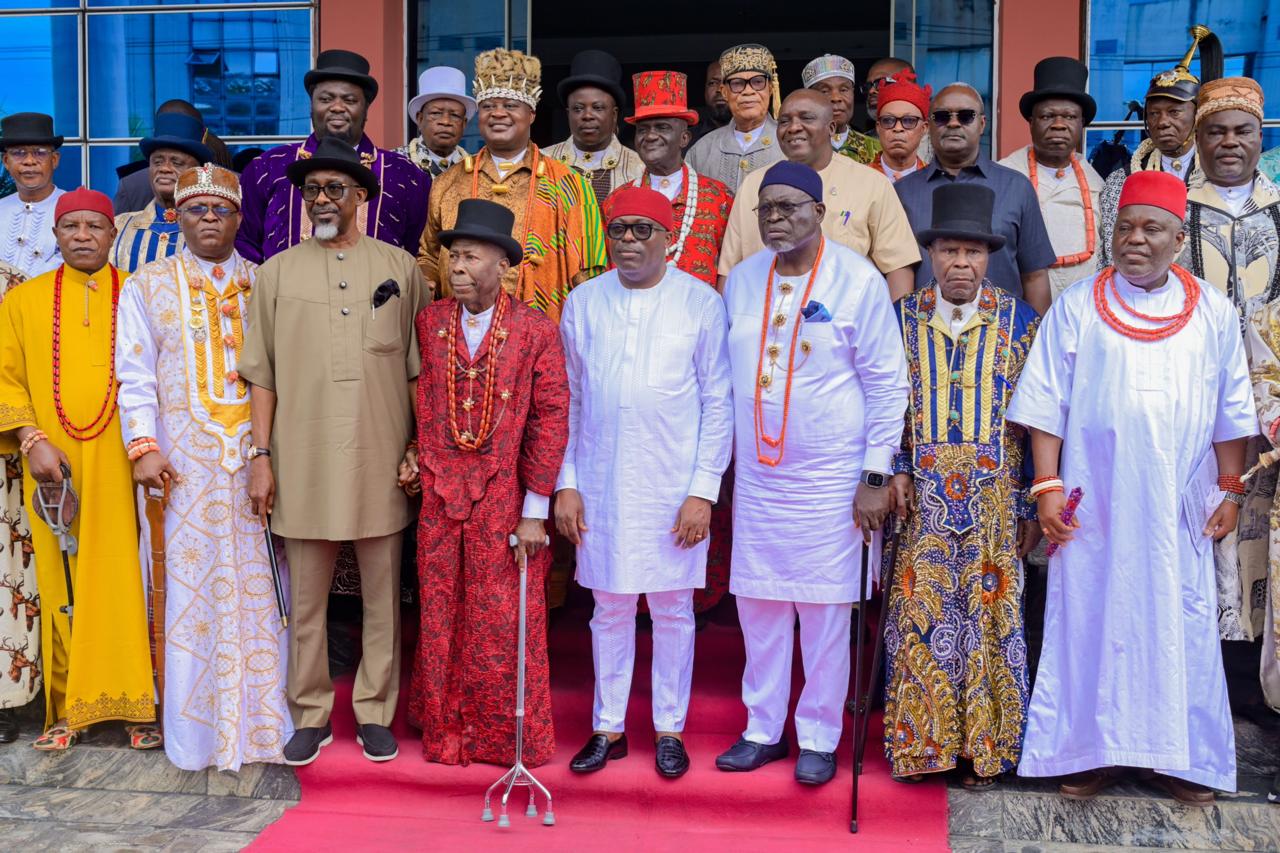
Rivers State Governor, Sir Siminalayi Fubara, has charged traditional rulers in the State to maintain neutrality, ensure fairness and uphold peace in their domains as the country prepares for the 2027 general elections.
Fubara gave the charge on Wednesday while declaring open the 126th, 127th and 128th Combined Quarterly Meeting of the Rivers State Traditional Rulers Council, in Port Harcourt.
The governor said the primary function of traditional rulers is to administer justice and ensure fairness, saying their conduct must not lead to division and unmanageable crises.
“Let me therefore, request, if that is the right word to use, that please, as we are entering into this political season actively, everyone should ensure that your conduct promoted peace in your place. Your actions should not be what would lead to the division and multiple crisis that we cannot manage as a government.
“I think with that, we can all live as one and we can also continue to make this progress that we are trying with all our mind, our body and our soul, to ensure that we deliver to our dear State,” he said.
Fubara urged the royal fathers to abide by the oath and constitution they swore to before ascending their respective stools, in the interest of stability and progress of the State.
He also enjoined them to set aside individual sentiments and place the interest of Rivers State above personal considerations, noting that this principle has guided his own day-to-day governance of the State.
“I want to enjoin everyone to keep aside issues of individual sentiments and ensure that the interest of our state supersedes whatever thing that we have in our mind. This is not just what I’m saying here, it is what I’ve also practiced and displayed in my day-to-day life in the governance of our dear State,” he said.
On the appeal for improved welfare for traditional rulers, the governor clarified that the delay in actualising some of the requests they made in the past was not from the government but from the inability of the Council to put its house in order.
Fubara explained that the issue of stipends paid to the traditional rulers by the local government councils, was a statutory benefit provided for in the constitution and not what a state governor can change by mere verbal pronouncements.
He assured that he remains a man of his word and will fulfill his promises to the traditional rulers before leaving office, next year.
He reaffirmed his respect for the traditional institution as custodians of culture and the closest link to the people, thanking them for their prayers and support.
The governor urged the royal fathers to ensure that the combined quarterly meeting featured fruitful deliberations that will strengthen peace and development in the State.
Earlier, the Chairman of the Rivers State Council of Traditional Rulers and Paramount Ruler of Apara Kingdom, His Royal Majesty, Eze Chike Amadi Worlu Wodo, expressed profound gratitude to the State Government for its efforts in maintaining a cordial relationship with the traditional institution.
Wodo highlighted the importance of traditional rulers in conflict resolution, noting that their closeness to the people places them in a strategic position to mediate in disputes involving chieftaincy matters, family disputes and land ownership in their respective communities.
The royal father drew the attention of the State Government to some challenges affecting the performance of the traditional institution, particularly the lack of official utility vehicles and logistical support needed to discharge its responsibilities effectively.
He also appealed for improved monthly stipends and better welfare provisions to reflect prevailing economic realities.
News
FG Must Address Nigerians’ Concerns On Reforms -Shettima …Warns Against Misuse of AI, Social Media

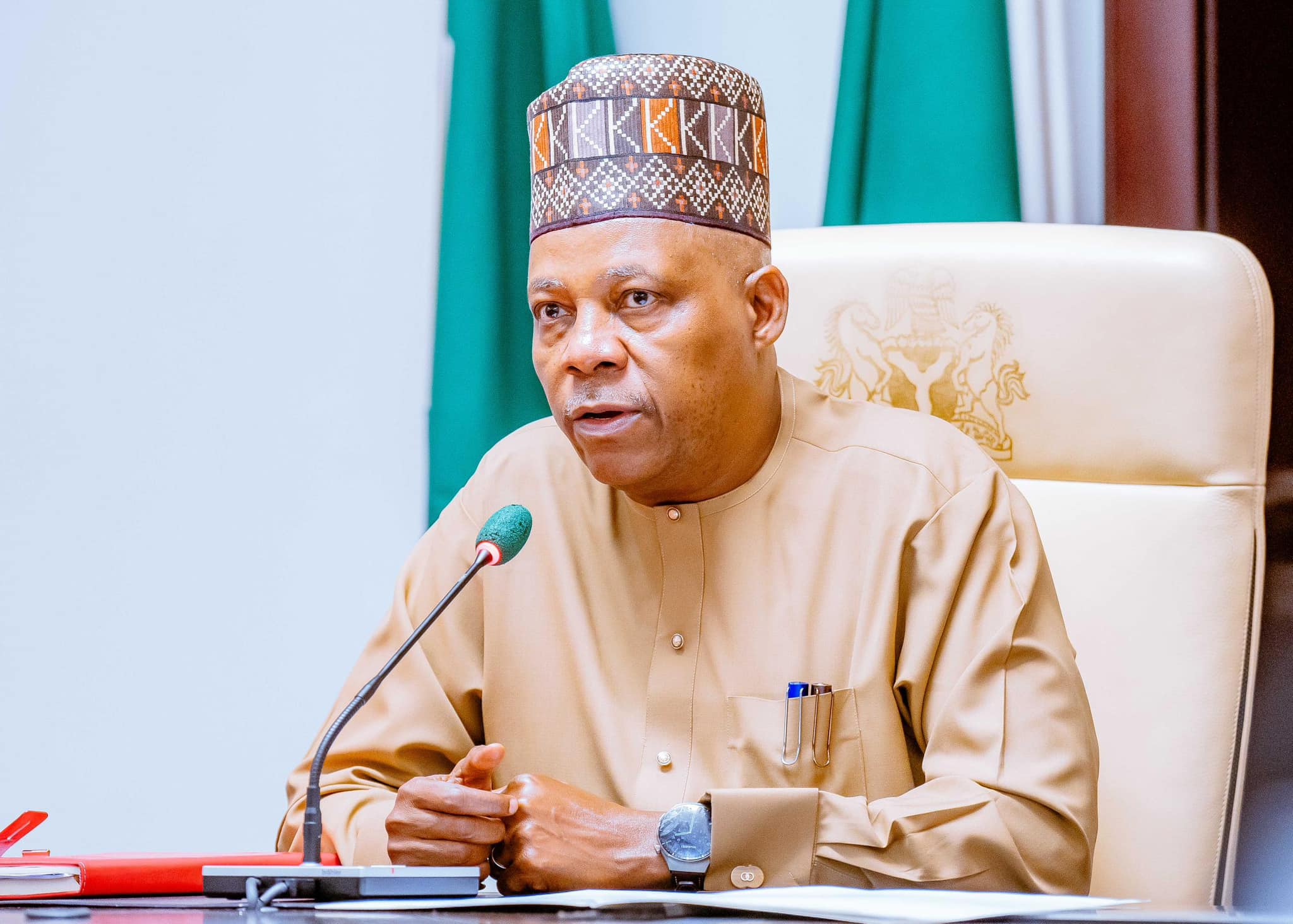
Vice President Kashim Shettima has urged the Federal Government to pay greater attention to Nigerians’ concerns about ongoing economic reforms, insisting that public confidence must be built through transparent communication, credible evidence of progress and responsiveness to citizens’ experiences.
Shettima made the call yesterday at The Duke’s Masterclass 2026, held at Transcorp Hilton, Abuja, where he was represented by his Special Adviser on Economic Affairs, Dr Tope Fasua.
The Vice President said the success of the administration’s economic policies would depend not only on their implementation but also on the government’s ability to demonstrate tangible results and address the challenges confronting citizens.
“Government must continue to communicate, however, its policies clearly, demonstrate progress with credible evidence, and listen attentively to the experiences of citizens,” he said.
Shettima defended the economic reforms introduced by President Bola Tinubu, including petrol subsidy removal, foreign exchange market liberalisation, fiscal restructuring and revenue mobilisation, describing them as measures intended to correct longstanding economic distortions and strengthen Nigeria’s productive capacity.
He explained that the policies were designed to attract investment, improve business confidence, enhance the deployment of public resources and establish conditions for sustainable economic growth.
However, he maintained that announcing policies was insufficient without building public understanding and confidence in their implementation.
The Vice President particularly challenged Nigeria’s elite, professionals and middle class to acknowledge the difficulties facing ordinary citizens while explaining the objectives of the reforms.
“Your role is not to defend every government action uncritically, nor to dismiss the concerns of citizens. It is to help create a more informed and constructive national conversation,” he stated.
He urged professionals engaging traders to recognise the pressures confronting businesses and advised those interacting with young graduates to acknowledge employment challenges while encouraging entrepreneurship and innovation.
According to him, constructive criticism and informed public participation are essential to effective governance and the sustainability of economic policies.
“Constructive scrutiny strengthens governance. Informed public participation strengthens democracy,” Shettima said.
He further stressed that leadership required the flexibility to adjust policy implementation in response to evidence and changing economic circumstances without abandoning established objectives.
Turning to the challenges of artificial intelligence and social media, the Vice President warned that technological advances were increasing the speed and sophistication of misinformation, posing risks to public confidence and institutional reputations.
“A photograph can be manipulated, a voice can be cloned, and a video can be fabricated just with a simple prompt on social media to make an individual appear to have said or done something that never happened,” he warned.
Shettima urged public institutions to strengthen information verification, correct false claims transparently and communicate through trusted channels, adding that speed should never take precedence over accuracy.
He also called for improved digital literacy and responsible use of artificial intelligence.
On economic opportunities, Shettima identified banking, financial technology, oil and gas, agriculture, real estate, construction, commodity exports and the creative industry as sectors capable of supporting investment and employment.
He nevertheless acknowledged the need to address unreliable electricity, inefficient transportation, insecurity, limited access to finance and weaknesses in education and public institutions.
He called for stronger domestic production, export expansion and support for small businesses, while urging that economic opportunities be extended to women, young people and rural communities.
In his opening address, the Chairman of Odu’a Investment Company Limited, Bimbo Ashiru, warned that poor leadership decisions and inadequate crisis preparedness could destroy institutional credibility.
“Reputation cannot be manufactured at the point of crisis. It is built over time through our decisions, our conduct, our values and the consistency between what we say and what we do,” he said.
Ashiru noted that geopolitical tensions, technological changes and economic disruptions were making leadership increasingly difficult, requiring organisations to strengthen accountability, transparency and crisis management.
He disclosed plans to extend the masterclass to London in March 2027.
Also speaking, former Commonwealth Secretary-General, Emeka Anyaoku, recounted his involvement in international conflict resolution, particularly negotiations surrounding South Africa’s transition from apartheid and political tensions in Bangladesh.
He stressed that successful mediation required a thorough understanding of the issues dividing opposing parties, the interests of their leaders and the appropriate timing of public communication.
“Because if you communicate the progress prematurely, you might sabotage the whole process,” Anyaoku said.
The Chairman of AXA Mansard and Group Managing Director of Sahara Power Group, Kola Adesina, criticised Nigeria’s persistent electricity challenges, arguing that public institutions and businesses should be judged by service delivery rather than explanations for poor performance.
“Rather than giving people megawatts of electricity, we are giving them excuses,” he said.
Adesina also condemned corruption, inflated public contracts and failures of accountability, warning that such practices weakened infrastructure, damaged public trust and endangered lives.
Meanwhile, the Chairman of the Duke of Shomolu Foundation, Joseph Edgar, explained that the masterclass was designed to equip organisations and individuals with practical strategies for anticipating crises, managing their consequences and protecting institutional reputations.
He said the initiative complemented the foundation’s use of theatre to promote social cohesion and strengthen public engagement.
Governorship candidate of the All Progressive Congress (APC) in Rivers State in the forthcoming 2027 election, Hon. Kingsley Chinda, has vowed to run an all inclusive administration that would ensure political harmony in the state, if elected into power.
Hon. Chinda, who is also the preferred governorship candidate of the Rainbow Coalition, said this shortly after he was unveiled along side other candidates of the political arrangement at a grand rally in Port Harcourt.
He said the coalition was committed to ending political divisions and promoting unity among the various political parties in the state.
Hon. Chinda also promised to make Rivers State experience peace, progress and development during his tenure as governor of the state.
“We are no longer divided on party lines.We are no longer playing the politics of the winner takes it all’’, he said.
Hon. Chinda, who spoke on behalf of the other candidates of the Rainbow Coalition, said the coalition’s vision extends beyond electoral victory, adding that its proposed government would accommodate people, irrespective of political affiliations, gender and religious belief.
“We are going to run a government for the people, with the best interests of Rivers people first,” he said.
Hon. Chinda also commended the Minister of the Federal Capital Territory (FCT), Chief Nyesom Wike, for bringing political stakeholders together under the umbrella of the Rainbow Coalition, while lauding Governor Siminalayi Fubara for presenting flags to the candidates.
He expressed optimism that the alliance would promote peaceful elections, a smooth transition of power and development projects capable of improving the lives of Rivers residents.
While presenting flags to chosen candidates of the Rainbow Coalition, Governor Fubara called on members of the Coalition and his supporters to put past disagreements behind them and work together under a common leadership ahead of the 2027 general elections.
He acknowledged Chief Wike’s role in his political journey and described the Minister of the FCT as the leader of the Rainbow Coalition.
Governor Fubara said the political groups had come together as one family and should no longer maintain separate camps.
He also pledged to support the coalition’s candidates and President Tinubu’s re-election bid, expressing optimism that cooperation among political stakeholders would strengthen the alliance.
Also speaking, Chief Wike urged members of the Peoples Democratic Party (PDP) and other political parties across the country to support President Tinubu’s re-election.
He called on politicians to set aside party differences and work together towards the coalition’s political objectives.
Chief Wike said the Rainbow Coalition represents a common political platform for stakeholders from different parties who had agreed to support the President and candidates seeking elective offices in Rivers State.
He also urged PDP members in Rivers, Kwara, Ogun and other states to support President Tinubu, while calling for support for the coalition’s candidates contesting the governorship, National Assembly and Rivers State House of Assembly elections.
The former Rivers State governor also addressed divisions within the PDP, rejecting attempts to portray him as merely a factional leader of the party.
He further criticised some opposition figures over their political ambitions and records in public office, particularly former Rivers State Governor Rotimi Amaechi and former Vice-President Atiku Abubakar.
Meanwhile, former Senator Magnus Abe has also called on Mr Amaechi to withdraw from the African Democratic Congress (ADC) vice-presidential arrangement with Alhaji Abubakar and support President Tinubu.
Senator Abe argued that the presidency should remain in Southern Nigeria, insisting that political leaders should respect the principle of power rotation between the North and South.
He recalled the controversy surrounding former President Goodluck Jonathan’s re-election bid, arguing that Mr Amaechi had previously opposed Dr Jonathan’s ambition on the grounds of power rotation.
“Today, the same man who led us to go against our son and our brother is now trying to lead us to go and support somebody from the North when it is the turn of the South.
“On behalf of all of us here gathered in Rivers State, we want to call on Amaechi to immediately respect his own position and resign as the vice-presidential candidate to Atiku Abubakar, because it is the turn of the South, and Rivers State will stand by the agreement between the North and the South,” he said.
Senator Abe also reaffirmed the coalition’s support for President Tinubu, declaring: “We are not just with Tinubu, We are with Tinubu. We are for Tinubu. We are by Tinubu. We are in Tinubu. We are Tinubu here in this coalition”, Senator Abe declared.
The event featured the presentation of candidates for various elective positions under the Rainbow Coalition.
John Bibor, Ephraim Godslove, Lazarus Ada, Chidibem Juliet & Okugbere Oghenetijiri
-
Opinion1 day ago
Ancestorial Worship: My Take (1)
-

 News1 day ago
FG Must Address Nigerians’ Concerns On Reforms -Shettima …Warns Against Misuse of AI, Social Media
-

 Featured1 day ago
Tinubu Jets To S’Arabia For Lesser Hajj …Unveils Free Healthcare For Pensioners
-
News1 day ago
Lawmaker Sets Sights On Assembly Return …As Mammoth Crowd Grace Flag Handover Rally
-
Politics1 day ago
My Administration’ll End Political Acrimony In Rivers – Chinda
-
Politics1 day ago
2027: Support Groups Pledge Grassroots Mobilisation For Tinubu, Rainbow Coalition Candidates
-

 Business1 day ago
Wigwe’s Luxury Yacht Goes For N8.74 Billion After Legal Proceedings
-
Niger Delta1 day ago
Police Rescue Woman, 24, From Online Dating Kidnappers … Arrest Five Suspects