
Politics
Rivers Guber: Intrigues, Unveiling Of The ‘Battle Axes’

2014 politics in Rivers State
ended not without major milestones in the activities of both the All Progressives Congress (APC) and the Peoples Democratic Party (PDP) ahead of the general elections slated for next month nationwide. But what started as gossips, political talk shops, then intrigues among the leadership and top notchers of APC and PDP, however, entered the crucial stage at the last quarters of 2014 when the political parties settled for their respective standard bearers.
First, it was the Rivers APC that unveiled its flag bearer for the gubernatorial race through a consensus arrangement that saw the emergence of Dakuku Adol Peterside, representing Andoni/Opobo/Nkoro federal constituency at the House of Representatives.
Unlike PDP in Rivers State where no fewer than 20 aspirants are known to have indicated interest in being Governor Chibuike Rotimi Amaechi’s successor, it was a rumour mill sort of in the state APC of who had his eyes at the Rivers Brick House after the incumbent occupant. The rumours centred around Dakuku Peterside and Senator Magnus Abe majorly, but both of them or any unknown pretender(s) incubated their governorship ambitions, perhaps for fear not to incur the wrath of “Oga at the top.”
The visit of General Muhammadu Buhari (rtd) to Rivers State to solicit the support and votes of Rivers APC delegates to the party’s presidential convention/primary, however, provided the opportunity for Governor Amaechi and leader of APC in Rivers, to open the lid on the choice of APC’s governorship candidate and the lot fell on the Opobo-born politician, Dakuku Peterside. The consensus choice of Dakuku Peterside was ratified at the APC’s ‘yes-vote’ primary that followed days later.
Dakuku Peterside’s choice and his emergence as Rivers APC governorship candidate sparked protests by youths in some major streets of Port Harcourt. The youths believed to be of the Ogoni extraction had protested over what they called ‘dumping of Senator Magnus Abe for Dakuku Peterside for the APC gubernatorial ticket in Rivers State” and the alleged reneged of Governor Amaechi in his purported promise to the Ogonis to use their son (Abe) for the ticket.
Though, the protests did not record any casualty, it was a day the police and other security operatives would not forget in a hurry of how they worked assiduously to prevent what would have resulted in a major breach of peace around Government House, the seat of power. Acting in a manner that all was well, the camp of Dakuku Peterside promptly exonerated the Ogoni youths in their involvement in the unfortunate protests, but the dust generated is yet to settle. Political observers argue that it may never be the same again between APC and the Ogonis despite moves to reconcile the irreconcilables arising from the choice of Rivers APC governorship candidate.
However, the Peoples Democratic Party gubernatorial aspirants in Rivers did not hide their ambitions right from onset. They came in their numbers and when the whistle was blown for the intent and nomination forms, over 20 aspirants applied for the governorship ticket of the party. The screening committee that examined all the aspirants for the job gave its verdicts; clearing the former Minister of State for Education, Chief Nyesom Ezebunwo Wike and a few others and disqualified the bulk of the aspirants. Those cleared alongside Wike were Lee Maeba, Pawariso Samuel-Horsfall, Dumbari Ben Dimkpa and Atamuno Atamuno.
Nothing beats like politics but the losers did not allow the undercurrents of politics to carry them away just like that. They trooped to Abuja and protested to the appeal panel that subsequently gave them a clean bill of health to contest the governorship primary of PDP in the state. Bekinbo Dagogo-Jack, Tonye Princewill, Dumo Lulu-Briggs, Nemi Walson-Jack, Bernard Mikko, Don Baridam, Dein Ajumogobia, Lancelot Ayanya and Sampson Ngerebara were among the aspirants cleared by the appeal panel to try luck at the primary.
At the Rivers PDP gubernatorial primary held at the premises of community secondary school, Nkpolu-Oroworukwo, Port Harcourt, 16 of the governorship aspirants boycotted the primary on December 8, 2014, alleging that processes leading to the primary were faulty and unacceptable.
But the boycott did not in any way invalidate the result of the primary that saw the former minister of state for education elected overwhelmingly as the PDP battle axe for what the party called ‘rescue mission.’ Rivers PDP explained that it was determined in every legitimate electoral means to recover its lost mandate to APC following the defection of Governor Amaechi and the state apparatus to APC, hence the need for a rescue mission.
Wike, a two-term chairman of Obio/Akpor local government council and former chief of staff to Governor Amaechi determined to change the direction of the political wind in the state, he and the Felix Obuah-led PDP leadership in Rivers, however, adjusted the political seat and sails, apparently to reach the destination point of recovering Rivers State from APC. That prompted the setting up of peace committees across the three senatorial districts to go all out and mend fences with the aggrieved members towards enhancing the party’s electoral chances. though a hard nut to crack, the Rivers PDP is optimistic that it would overcome its challenges as it did in the past before the general elections proper.
Even as the PDP leadership has not given any thing to chance to keep its house in order before the d-day, protest is still far from over. Only recently, Chief A.K. Horsfall-led Kalabari elders’ forum reopened the old wound when it gave a seven-day ultimatum for the national working committee (NWC) of PDP to substitute the governorship candidature of Wike with any Kalabari candidate in the interest of justice and fair play.
The reaction of Rivers PDP leadership over the ultimatum was prompt and understandable. In a press release, Obuah in an unmistaken terms accused Horsfall’s forum of playing the script even as he said what the forum asked was not feasible going by the transparency of the primary.
Barring any last minute somersault which many believe is not likely to happen, both the PDP and the APC appeared set to go into the governorship contest having baptized their candidates – Wike (PDP) and Peterside (APC) for the battle of Rivers Brick House.
As Wike and Peterside secured the driving seats of their respective parties, they also chose co-pilots or better put running mates for the governorship race. While Wike presented a female from Degema-Kalabari axis of Rivers State, Peterside unveiled a male from the Orashi area of the state.
Presenting Dr. Ipalibo Gogo Banigo , in a bold attempt at wooing women in the state, Wike explained that he decided to choose a woman as his running mate because of his desire to create room for women to play active role in the political and economic development of the state.
Though, the task of choosing his running mate took Wike some time because of what he described as “rot in the governance in the state,” the PDP guber candidate said the history of the state was awash with the input of women, but regretted that none had been given the opportunity to hold an office as high as that of the state deputy governor.
The time, according to Wike, has come to give women the chance to play active role in the politics of the state, and this informed the choice of Dr. Banigo whom Wike described as a rare breed and a leader with uncommon traits to join in the task of rebuilding the state.
“The Rivers PDP is determined to move away from the primordial era of treating women with disdain and indignity. We want to move away from the acts of our opponents, who relish giving out token to women. As a step, the Rivers PDP decided that a woman should occupy the post,” Wike said, while presenting Dr. Banigo – a senior medical practitioner, ex-permanent secretary, former Head of Service in the state and Secretary to the State Government.
Banigo, in his acceptance speech, expressed gratitude to the party and Wike for picking her as his running mate. The smile at her face did not betray her loyalty and commitment to drive along with Wike to Government House, God’s willing.
Pleasant luck came the way of Honourable Asita who hails from Okaki in Ahoada West LGA of Rivers State as he was picked as Peterside’s running mate. Asita, a former commissioner for youth development during Dr. Peter Odili administration, is currently a member of the lower chambers of the National Assembly.
Adjusting to political realities, Buguma-born prince, Tonye Princewill did not allow the blow of political faith lie him low when he lost out amongst others at the PDP guber race. He moved on: this time to the Labour Party (LP) where he subsequently edged out other contenders in the race and secured the LP guber ticket.
Now that the coast is clear of who and who are contending for Amaechi’s shoe, it stands to reason that the acceptability of the political party in the state, the meaning the contenders bring into play and of course, the candidate’s grassroots support will largely determine which party and governorship candidate that will carry the crown of glory at the end of the day.
Samuel Eleonu
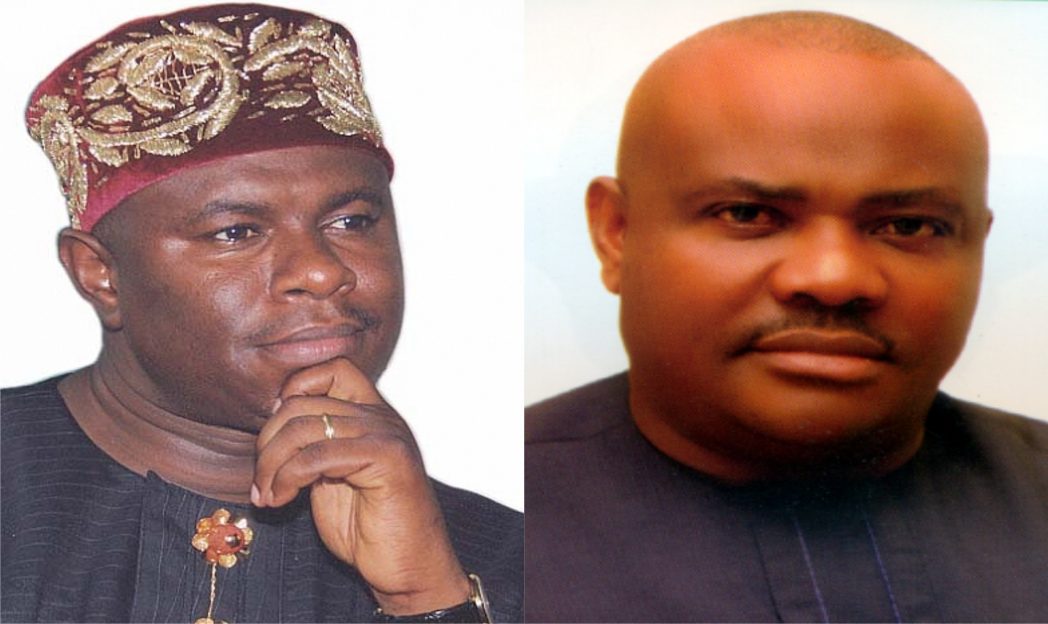
Dakuku Peterside, APC Guber Candidate and Nyesom Wike, PDP Guber Candidate



The Independent National Electoral Commission (INEC) has extended the deadline for political parties to submit the list of candidates for the 2027 governorship and state Houses of Assembly elections from Saturday, August 8, to Tuesday, August 11, 2026.
The commission announced the extension in a statement issued on Saturday and signed by the National Commissioner and Chairman of its Information and Voter Education Committee, Mohammed Haruna.
According to INEC, the decision followed appeals by political parties for additional time to complete the submission process through the dedicated online portal.
“The submission window, which according to the revised Timetable and Schedule of Activities for the General Election was originally scheduled to close on Saturday, 8th August, 2026, has been extended to Tuesday, 11th August, 2026,” the commission said.
In a a related development, INEC announced the suspension of PVC collection in Osun State ahead of the August 15 governorship election.
The commission said voters who applied for replacement of lost, damaged or defaced Permanent Voter Cards would have until midnight on Sunday, August 9, to print downloadable copies of their cards.
The electoral body explained that the deadline was necessary to enable it compile data on downloaded PVCs and produce final statistics on the total number of cards collected ahead of the election.
INEC said PVC collection in Osun commenced at the Registration Area level from July 22 to 28, 2026, but was extended to July 31 following complaints about large crowds and difficulties experienced by voters at collection centres.
The exercise subsequently moved to the local government level and ran from August 1 to 7.
The commission also disclosed that replacement downloadable PVCs had been made available to voters in Odo-Otin and Ife Central Local Government Areas following the theft of cards during attacks on the two collection centres.
It stressed that the stolen cards could not be used to vote.
INEC reassured Osun residents of its preparedness for the August 15 governorship election.
“The commission reiterates that the stolen cards cannot be used to vote.
“INEC reassures the people of Osun State of its readiness to conduct a free, fair, credible and inclusive governorship election on 15th August, 2026,” the statement said.
The commission said the deadline, initially set for Saturday, 8 August, has been extended to Tuesday, 11 August 2026, following appeals from political parties for more time.
INEC also announced that the window for voters who applied to replace lost, damaged or defaced PVCs to download their replacement cards will close at midnight on Sunday, 9 August.
The move is to enable the commission compile final PVC collection figures ahead of the 15 August Osun governorship election.
INEC said replacement downloadable PVCs have also been provided to affected voters in Odo-Otin and Ife Central Local Government Areas after hoodlums carted away cards from two collection centres, stressing that the stolen cards cannot be used to vote.
The commission reaffirmed its readiness to conduct a free, fair, credible and inclusive election in Osun State.
Gov. Kefas made the remarks over the weekend at the Federal Medical Centre (FMC), Jalingo, during the flag-off of the second phase of the Renewed Hope Medical Outreach in Taraba State, organised as part of activities marking Prof. Yilwatda’s 58th birthday.
The governor commended Prof. Yilwatda for choosing to mark his birthday by providing medical care to people in need.
“What Professor Nentawe did is a powerful demonstration of what leadership should be,” Gov. Kefas said.
He assured that his administration would continue to support initiatives that complement government efforts to improve healthcare delivery and the wellbeing of residents.
Speaking at the event, Prof. Yilwatda called on Nigerian leaders to embrace the culture of giving and use their positions to touch the lives of the less privileged.
He said his decision to celebrate his 58th birthday in Taraba State was deliberate and informed by the needs of underserved communities, particularly people who face difficulties accessing healthcare because of distance and financial constraints.
According to him, the intervention followed a needs assessment and was extended across the three senatorial districts of the state.
He said the exercise commenced on August 3 at Takum General Hospital and covered the Federal University Teaching Hospital, Wukari; First Referral Hospital, Sunkani, Ardo-Kola Local Government Area; General Hospital, Bali; General Hospital, Gembu; and FMC Jalingo.
Prof. Yilwatda said the intervention provided medical services to thousands of beneficiaries, including people who required surgical procedures.
He said sustainable national development could only be achieved when strong institutions placed Nigerians at the centre of development.
“Leadership is about service,” he said, urging political and public leaders to make giving back to society an important part of their responsibilities.
He reaffirmed his commitment to serving Nigeria and its people, saying his personal vision was to make every day of his life useful to humanity.
“Every day that I live, the vision is: let it be useful to humanity,” he said.
The Taraba State Commissioner for Health, Dr. Bordiya Buma, commended the initiative, saying it was consistent with the Renewed Hope agenda and efforts to strengthen healthcare delivery in the state.
Dr Buma said the second phase followed the successful completion of the first phase, which was conducted simultaneously in six local government areas, with two LGAs selected from each of the three senatorial districts.
According to him, more than 10,000 patients were attended to during the first phase, including people with medical and surgical conditions.
He disclosed that 327 general surgeries, 71 eye surgeries and 575 dental procedures were carried out during the exercise.
The commissioner expressed appreciation to President Bola Tinubu for the Renewed Hope Medical Outreach and thanked Prof. Yilwatda for supporting the initiative and choosing Taraba State as a beneficiary.
The Minister of Health and Social Welfare, Prof. Muhammad Ali Pate, also commended Prof. Yilwatda for choosing Taraba State to mark his 58th birthday through a medical outreach.
Prof. Pate said making healthcare the centrepiece of the birthday celebration was significant because health affects everyone.
-

 News2 days ago
RSG Targets Nine Million Residents in Mosquito Net Distribution Campaign
-

 Oil & Energy2 days ago
Aiyedatiwa Signs New Electricity Bill
-

 Maritime2 days ago
Marine Minister Commends President Tinubu On NPERA Bill Assent
-

 Oil & Energy2 days ago
NLNG Commissions Research And Innovation Centre In RSU
-

 News2 days ago
KenPoly Holds Eight Convocations, August 29
-

 News2 days ago
RMAFC Completes Revenue Sharing Review, Proposes New Pay
-

 News2 days ago
RSG Begins Another Phase of Projects Commissioning Today
-

 Maritime2 days ago
NAGAFF Petitions IGP Over Alleged Maritime Police Harassment