
Features
Nigeria’s Legal System And Its Challenges

The 2015 annual conference/lecture of the St. Paul’s Cathedral, Diobu, Port Harcourt which held recently focused on how the Nigerian legal system can be a source of hope and truly to the common man. It was centered on the menace of justice, corruption and continued dependence of the system on government.
Eminent legal luminaries as well as clergies and laities delivered lectures and speeches at the event which also marked the remembrance of the first African Anglican Bishop, Ajayi Crowther.
Among those who delivered lectures at the auspicious occasion were Sir Granville I. Abibo, SAN; Barrister Rosemary Inko-Dokubo, Barrister Florence Haminala represented by Barrister D. Dan-Jumbo, Ven. Chimela Samuel, Most Rev. (Dr) Ignatius C. O. Kattey and the Cathedral Archdeacon, Ven. John C. Adubasim.
Infact, for the church to draw a progressive analogy of the Nigerian Legal System clearly shows that there is indeed a problem. And for the St. Paul’s Cathedral to have chosen to focus this year’s event on Nigeria’s legal system means that the government needs to take an aggressive look into the system.
Sir Granville Abibo, a Senior Advocate of Nigeria (SAN) in his paper titled “The Nigerian Legal System and Endemic Corruption” said eradicating corruption completely may be a herculean task but could be achieved if a legal system that adheres to high standards of independence, impartiality, integrity and accountability is put in place. He noted that it is the direct duty of the judiciary to direct society to the attainment of truth and justice but that path of justice and truth is shrewn with the hydra-headed problems of corruption and the interference of the government of the day in the judicial system of the country.
The SAN insisted that the troubling legacies of corruption, executive control and manipulation of the judiciary continued to undermine the ability of the courts to effectively secure truth and justice. “These legacies create major obstacles to a fair trial in Nigeria. To this end, honest and impartial decision making, which is vital to the credibility of the judiciary, is relatively on the decline.”
He identified the attitude of politicians who pay lip service to the independence of the judiciary so that it cannot play its constitutional role effectively as another obstacle to the attainment of truth and justice in Nigeria. Citing Section 17(2) (e) of the Constitution which provides that the independence, impartiality and integrity of the courts of law and easy accessibility thereto shall be secured and maintained. Section 121(3) of the constitution, he added, provides that “any amount standing to the credit of the judiciary in the consolidated revenue fund of the state shall be paid directly to the heads of courts concerned.” These provisions have been complied with more in the breach.
Only recently, these provisions which received judicial pronouncement resulted in strike actions in various states in the country and it is still continuing in some states. The judiciary in Nigeria has not attained the independence required to enable it achieve justice and truth with inhibitions. It is still seen as under the appendage or apron string of the executive.
The manner of appointments of judges and magistrates as well as the absence of financial autonomy in the true sense of it have raise the recurring question as to whether the independence of the judiciary is a myth or reality, and whether the constitutional provisions which guarantee the independence of the judiciary is no more than a slogan in Nigeria.
These problems, according to Sir Abibo, have made it difficult, if not almost impossible, for citizens to realize the constitutional guarantee of justice which the judiciary ought to protect. As hydra-headed as the corruption malaise may be, with an independent and incorruptible judiciary, justice and truth can still be achieved because as he put it, “where there is a will, there can be a way.” As a matter of fact, corruption which is in all facets of our society and in our daily lives is a major obstacle to the attainment of justice and truth in any given legal system just as it is unavoidable a global and social phenomenon.
In the Nigerian legal system, the menace of corruption has engulfed our governance to a large extent. The legal system of this nation can be propelled to ultimately achieve justice and truth when things that can make the system function optimally are put in place. Sustained judicial reforms as is on-going presently in Ghana and the weeding of corrupt judges and magistrates from the courts will pave way to attainment of justice and truth as it is said that “a corrupt judge in society is worse than an armed robber.”
In her paper still on the Nigerian Legal System, Barrister Rosemary Inko-Dokubo disclosed that the Nigerian legal system is based on the English Common Law and legal tradition by virtue of colonization and the attendant incidence of reception of English law through the process of legal transplant. The English law, she said, has a tremendous influence on the Nigerian law, citing section 45(1) of the Interpretation Act which provides that the common law of England and the doctrines of equity and the statutes of general application which were in force in England on January 1, 1900 are applicable in Nigeria, only in so far as local jurisdiction and circumstances shall permit.
She defined corruption as the abuse of bestowed power or position to acquire a personal benefit, pointing out that corruption may include many activities including bribery and embezzlement of funds. Government or political corruption occurs when an office holder or other governmental employee acts in an official capacity for personal gain.
Quoting an economist, Ian Senior, corruption is an action to secretly provide a good or a service to a third party so that he or she can influence certain actions which benefit the corrupt agent has authority. Daniel Kaufmann of the World Bank expanded the concept to include ‘legal corruption’ in which power is abused within the confines of the law – as those with power often have the ability to make laws for their protection.
In Nigerian constitution, this is called the immunity clause.
Barrister Inko-Dokubo classified corruption as petty, grand and judicial corruption. Petty corruption occurs at a small scale and takes place at the implementation end of public services when public officials meet the public; for example, the exchange of small improper gifts or use of personal connections to obtain favour. Grand corruption is defined as occurring at the highest levels of government in a way that requires significant subversion of the political, legal and economic systems. Such corruption is commonly found in countries with authoritarian or dictatorial governments but also in those without adequate policing of corruption.
Judicial corruption refers to that related to misconduct of judges and magistrates through receiving or giving bribes, improper sentencing of convicted criminals, bias in the hearing and judgement of arguments and other such misconduct. Judicial corruption emanates from the system of appointment of judges where the governor or president of a state or country appoints and the judge will not have the will to refuse any request made to him by the governor or president. This is a matter of he who pays the piper dictates the tune.
In his keynote address, Bishop Ignatius Kattey described ‘legal’ as anything done according to the ‘law’, which takes different forms and issued by the legislature or common decisions from the courts. When a law is in a statutory form, it tends to be prescriptive and detailed as against the descriptive, which has to do with the law of nature. Prescriptive laws are civil and criminal law which is concerned with law as a system of rules that tends to order human behavior.
While criminal law deals with crimes or offences, which act through the police, court penal system and prosecutes and penalises offenders, the civil law governs the relation of persons to each other, provides solutions through compensation, enforcement and restraint. By Bishop Kattey’s interpretation or concept, the law, with respect to the legal system, is an institution that is established for the good of humanity. This, according to him, buttresses the fact that our legal system should be accorded respect as a hope not the last hope of the common man.
He quoted Robert Egbe as saying “our problem is actually the will power to implement the laws even as enacted. Enforcement is difficult and as long as we don’t enforce our laws, even if we make death the penalty for corruption, you will find out that the institutions will not even apply it.” Yisa Eneyramoh, a writer of law and society also argued that corruption in the judiciary cannot be wiped out until all hands are on deck. “Contrary to the much talked about corruption in the Nigerian judiciary, only 64 out of the 1,020 judges serving in the Supreme Court have so far been punished by the National Judicial Council (NJC) for various offences bordering on corruption between 2009 and 2014.”
According to Eneyramoh, “corruption in the judiciary cannot abate unless and until the Federal Government stops regarding such criminality as the family affair or a private matter for the judiciary.” Said Kattey: “As a church, we desire to play our role in harassing the integrity of the Nigerian Legal system rather than condemn this institution, and to derive and proactively add an inspiration to our members who work in this capacity; and to the nation at large that the Nigerian legal system can be a veritable tool to human and societal development. But this can only be made possible when we take a leap to promoting truth, justice and learning to adopt “the benefit of doubt syndrome.”
Barrister Florence Haminala said it is possible to deliver judgement against a case that involves the government but noted it was a dangerous decision unless the judge would be prepared to write his will. The society must rise up and condemn the ills in the country’s legal system, she stressed.
For the Nigerian legal system to function effectively and dispense justice and truth in the courts there is need for transparent appointment process for judges and magistrates, merit and competency, rather than ethnicity taking a centre stage, Care must be taken to appoint vibrant, competent persons of integrity and competent judicial officials to the bench. According to Charles Hungles: “An honest, high minded, able and fearless judge is the most valuable servant of democracy, for he illuminates justice as he interprets and applies the law.” Corrupt judges must be wiped out of the system.



It has been 25 years of impactful development of the Niger Delta region, facilitated by theNiger Delta Development Commission. NDDC. Without doubt, it has been a remarkable journey, marked by significant milestones and daunting challenges.
For the past week, the NDDC has been celebrating its achievements, beginning with a thanksgiving service in Akure, Ondo State, on July 6, drawing stakeholders and Niger Deltans to express gratitude to God for the Commission’s journey so far.
Taking off on the wings of the Oil Minerals Development Commission, OMPADEC, in 2000, the NDDC has grown into a symbol of federal presence in the oil-rich Niger Delta region.
The celebration moved from spiritual reflection and thanksgiving to strategic communication, with a World Press Conference held in Asaba, Delta State, on Monday, the 7th of July. There, members of the Fourth Estate across all media gathered in what was perhaps the most extensive media engagement of its kind. The NDDC Managing Director and Chief Executive Officer, Dr. Samuel Ogbuku, reaffirmed the Commission’s commitment to its motto of “making a difference.”
Dr. Ogbuku stated, “The President gave us a matching order during our inauguration to positively turn things around in the Niger Delta region.” That presidential directive, he noted, continues to guide the Board and Management as they pursue legacy projects across the region.
From electricity restoration in Ondo to road linkages in Bayelsa and Akwa Ibom, the NDDC’s impact was showcased in clear, tangible terms. “We commissioned the 45-km double-circuit 33KV feeder line from Omotosho Power Station to Okitipupa in Ondo State,” Dr. Ogbuku recalled, “bringing electricity back to 25 local governments after 15 years in darkness.” This was just one of several landmark interventions highlighted during the press briefing, underscoring the Commission’s renewed vigour under the current leadership.
The Managing Director spoke candidly about the setbacks caused by years of instability in leadership. “Frequent changes in management and boards have slowed our progress,” he admitted. “But today, we are targeting legacy projects. Our mandate is to complete those critical projects.” He emphasised that the Commission had transitioned from a transactional mindset to one of transformation, including the digitisation of procurement processes to ensure transparency and accountability.
Other top executives echoed similar sentiments. The Chairman of the Governing Board, Mr. Chiedu Ebie, stressed the importance of collaboration, particularly with the media, whom he described as “critical stakeholders” in advancing development. Alabo Boma Iyaye, the Executive Director of Finance and Administration, noted that the celebrations would run until Saturday, July 12, culminating in a gala night and plenary session in Port Harcourt.
Perhaps, the most significant message from the silver jubilee celebration is the renewed hope that the Niger Delta can finally experience holistic and sustainable development.
According to Ogbuku, “Through the initiative of the Board and Management, we have restructured the administrative architecture of the Commission to its 13 statutory Directorates, introduced robust Corporate Governance protocols… This formalised a value- driven institutional culture anchored on ethics and performance.”
As the weeklong celebrations continue across different states in the region, the NDDC appears determined not just to celebrate its past but to chart a bold course for the future.
The people of the Niger Delta are watching, hopeful that the next 25 years will be defined not by promises, but by lasting progress that transforms lives and communities, truly making a difference.
The celebration also featured a movie premiere titled “Making a Difference”, which traced the Commission’s journey and told stories of transformation in communities once plagued by underdevelopment. For many observers, the film served as both an emotional tribute and a powerful reminder of the NDDC’s role in shaping the destiny of the region.
The Governing Board and management of the NDDC have again proven to Nigerians, particularly the people of the oil-bearing Niger Delta region, that history does matter. They have also shown clearly that extraordinary personalities can upturn calculations and permutations. The above assertion was evidenced by the torrents of praises, accolades, and commendations poured on the Commission and its management and board by critical stakeholders during its week-long 25th anniversary celebration.
Beginning with Ondo State, one of the NDDC mandate states, Ondo Governor, Lucky Aiyedatiwa, hailed the management of the NDDC for the peace and development currently prevailing in the Niger Delta region. He said the Commission, under the current management and board, has succeeded in bridging developmental gaps in the region, noting that NDDC’s emphasis on partnerships and collaboration aimed at driving sustainable development across the Niger Delta has ushered in unprecedented progress.
Aiyedatiwa, who spoke at the Thanksgiving Service of the NDDC held at St Thomas’s Anglican Church, Akure, the Ondo State capital, stressed that the commission has undoubtedly lived up to its established mandate, commending the Board and Management for their exemplary leadership and commitment.
The Governor hailed the commission’s commitment and dedication to project conception, implementation, and completion, noting that the NDDC has established a culture of delivery and the region would no longer witness abandonment of projects as was the case in the past.
He said, “As we celebrate the Silver Jubilee of the NDDC, we must acknowledge the progress we have made and also recognise that there is still much work to be done as the Niger Delta region continues to face significant development challenges and we must work together to address these issues. “I urge the NDDC to continue to improve on its activities, ensuring that projects are tailored to the needs of the communities we serve. Let us work together to unlock the potential of our region, promote economic growth and enhance the lives of our people. We are partners in progress, unity and development.”
From Ondo State to Asaba, the Delta State capital, it was the same rain of praises. The Asaba monarch, the Asagba of Asaba, Obi Epiphany Azinge, on his part, was full of praises for the NDDC for its achievements in the past 25 years.
Obi Azinge spoke when Ebie led a delegation of the Commission’s Board and Management to pay a courtesy visit to him in his palace in Asaba, the Delta State capital. The Royal Father commended the NDDC for its intervention in several sectors across the Niger Delta region.
He expressed delight with the foreign postgraduate scholarship programme, which had helped many youths from the Niger Delta upgrade their knowledge.
He also acknowledged the contributions of the NDDC Chairman, whom he said had served the Delta State Government in different capacities. He noted that Ebie served meritoriously as Delta State Commissioner for Basic and Secondary Education and later, Secretary to the State Government. The monarch thanked the NDDC for selecting Asaba as the venue for some of the activities marking its 25th anniversary, such as a press conference and the movie premiere.
Earlier, the NDDC Board Chairman congratulated Asagba on his ascension to the throne of his forefathers, saying he was eminently qualified for the position. Ebie expressed optimism that the Asagba’s reign would bring good tidings to Asaba, which serves as both a Kingdom and the capital of Delta State.
He stated that the NDDC had come of age and was now a big brother to the new development agencies in Nigeria’s geo-political zones. Ebie disclosed that as part of the silver jubilee celebration, the Commission was going around the nine States of the Niger Delta.
The NDDC Chief Executive Officer pledged that the NDDC’s commitment to adhering strictly to the President’s directive to the Commission to complete all ongoing projects in the region, including roads, bridges, schools, and healthcare facilities. He disclosed that the Commission was engaging all stakeholders to ensure harmony and cooperation in the task of developing the hitherto neglected Niger Delta region.
He noted that, ”It is not only by our efforts; it is the collaborative efforts from all the stakeholders who believe the time has come when there should be stability in the NDDC and that stability is a challenge to us to ensure that we deliver development to the people of the Niger Delta region.”
Ifeatu Agbu
Agbu wrote in from Port Harcourt.
The mandate of the Niger Delta Development Commission, NDDC, is to facilitate the rapid and sustainable development of the Niger Delta region, while that of the Economic and Financial Crimes Commission, EFCC, is to investigates financial crimes and put corrupt practices in check.
Given their different roles, the idea of an alliance between the two organisations may seem far-fetched. However, with the NDDC Managing Director, Dr Samuel Ogbuku, and the EFCC Executive Chairman, Mr. Olanikpekun Olukoyede, it is not just an idea; it is a reality.
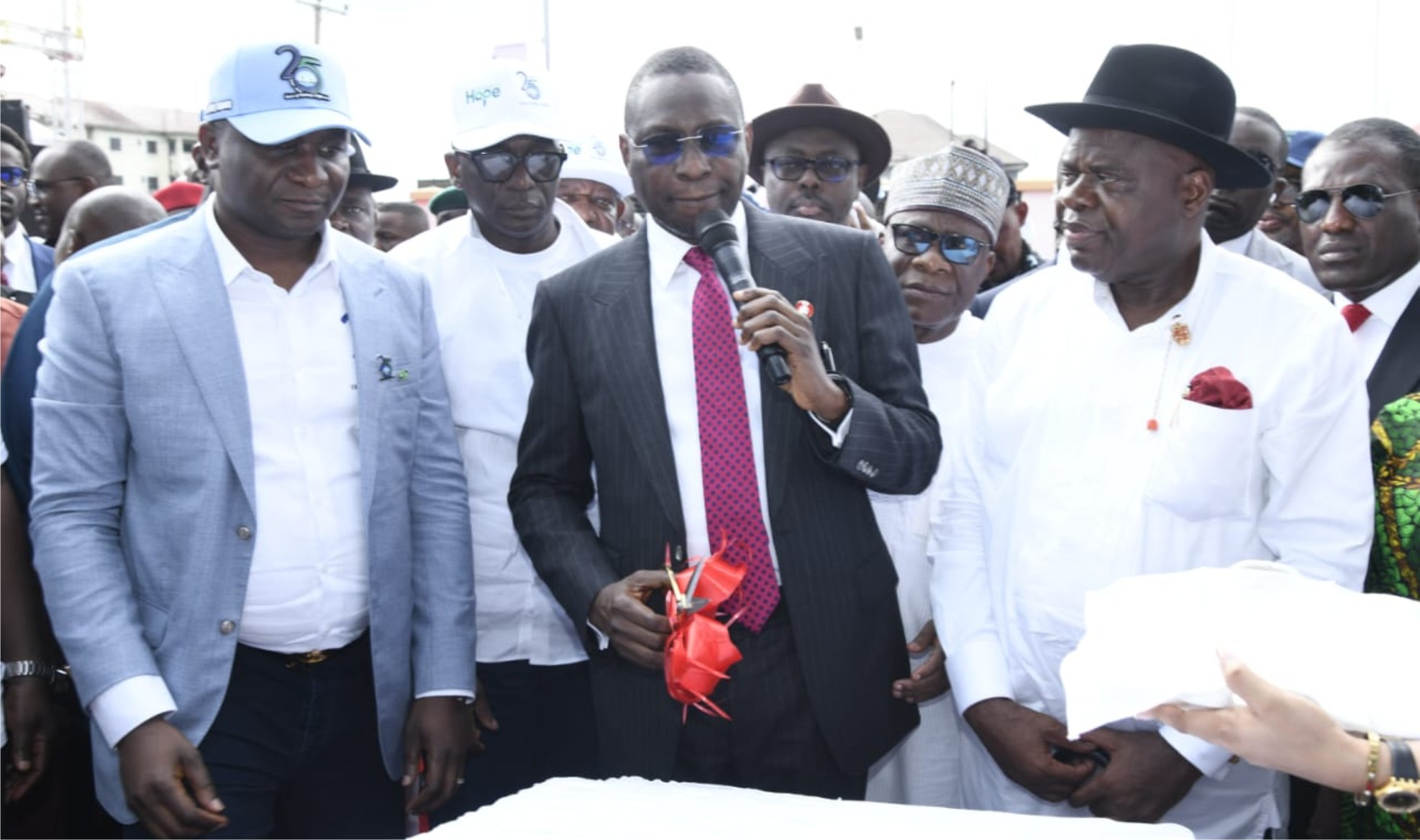
The unique collaboration between the NDDC and the EFCC has given rise to the Renewed Hope Multi-Purpose Training Centre, unveiled on Tuesday at Otuokpoti Community in Ogbia Local Government Area, Bayelsa State.
According to the NDDC Managing Director, the vast training complex was executed with funds recovered on behalf of the Commission by the EFCC.
Ogbuku explained that the Bayelsa training centre was funded through the money recovered by the EFCC and executed under a signed performance bond, ensuring transparency and impact. He noted that the facility represented one of several such centres being constructed in Delta and Rivers States. He said: “We have similar facilities currently under construction in Odi, Bayelsa State, while the ones in Delta State are being built in Patani and Ozorro and another two in Rivers State.”
He observed that the Multi-Purpose Training Centre, which was completed in record time, was a partnership between the EFCC and the NDDC, as the anti-crime agency had recovered the funds that facilitated the project’s execution.
Ogbuku observed that the facility, which could accommodate 1,000 persons, represented a significant step toward empowering local communities through skills development and inclusive growth.
The training centre’s components, which include a school, hospital, cafeteria, police post, and recreational centre, are all designed to support training, healthcare, and emergency accommodation within a single integrated complex.
Speaking at the inauguration ceremony, the EFCC Chairman assured the NDDC of the release of more recovered funds in the coming weeks.
Olukoyede described the NDDC as a “renewed and transformed government agency.” He assured that the EFCC would do everything to recover all outstanding statutory contributions due to the NDDC from oil companies.
He noted: “We have made several recoveries on behalf of the NDDC, and we will not relent in this direction. We are encouraged by the fact that the NDDC is making the Renewed Hope Agenda of the Federal Government a reality in the Niger Delta region.”
Olukoyede commended the NDDC for its institutional and policy reforms, declaring that the people of the Niger Delta will have every reason to celebrate the current leadership of the Commission. He described the NDDC as a beacon of good governance under President Bola Ahmed Tinubu.
He noted: “The Niger Delta is the goose that lays the golden egg and should not be denied the benefits of that golden egg. On our part at the EFCC, we must do everything within our power to ensure that the three per cent statutory contribution due to the NDDC is recovered and handed over to the Commission. We are going to continue supporting you.”
He said further: “Under this President, NDDC is working; good governance is being delivered. It is my delight to be part of this transformational agenda. The Renewed Hope Agenda is no longer a slogan—it is a reality. For the first time, people are identifying with what NDDC is doing.”
Olukoyede commended the NDDC, saying the Commission has refined its processes to uphold the principles of probity. This aligns with the agency’s head’s emphasis on upholding transparency and accountability in the country’s affairs.
The Chairman of the anti-crime agency confessed that his perspective on the NDDC was turned around in 2024, when the NDDC management, led by Ogbuku, paid him a courtesy visit at the EFCC’s headquarters in Abuja.
Olukoyede stated that he was impressed by the Commission’s “Rewind to Rebirth” initiative.
He declared: “The five minutes of interaction with the MD left me with a different perception of NDDC. Maybe, we will begin to see an NDDC that is a symbol of pride, accountability, transparency and able to deliver on its mandate.
“From his presentation, you can see that he is ready to bring a change, and that is the exact thing that we stand for in EFCC.”
Assuring that the EFCC would continue to assist the NDDC to achieve its mandate, he said: “We have been working with you to make recoveries; we will continue to do more.
“The collaboration is something we need to take to the next level, and with what you have put on the table I think we are ready to work with you to strengthen your systems and processes and to take the NDDC to the next level.”
In his remarks, the Minister of Niger Delta Development, Engr. Abubakar Momoh, praised the NDDC Board and Management for their unity of purpose and commitment to service delivery, stating that the level of harmony and stability within the Commission is unprecedented.
He declared: “What we are witnessing here today has never happened in the history of the NDDC. Since I assumed office as Minister, I have not been called upon to settle any crisis within the Commission. This is a testament to the teamwork between the Board and Management.”
Also speaking, the Chairman of the NDDC Governing Board, Mr. Chiedu Ebie, emphasised the human capital development focus of the two projects commissioned, noting that reforming the NDDC is an ongoing but rewarding process.
He stated: “We are moving from transaction to transformation. We are doing our best to improve not just the reputation of the NDDC, but everything that concerns the Commission. Today is about promoting and celebrating human capacity.”
Without a doubt, the Niger Delta region is confronted with ecological and environmental challenges that should, perforce, attract significant funds from the Federal Government and the oil companies operating in the region.
Sadly, this has not been so, thus limiting the capacity of the NDDC to fulfill its mandate of driving the development process and transforming the Niger Delta region into one that is “economically prosperous, socially stable, ecologically regenerative and politically peaceful.”
It is rather unfortunate that, despite the spirited efforts by successive boards and managements of the NDDC to meet the expectations of the people, their efforts have not been matched with commensurate funding.
The issue of inadequate funding is resurfacing again. Indeed, it is an inconvenient truth that will remain on the front burner until it is fully addressed.
That explains why the NDDC Managing Director highlighted the issue during interactive sessions that the Commission’s Board and Management held with the relevant Committees of the National Assembly in Abuja last year.
Ogbuku told the House of Representatives Committee on NDDC, chaired by Hon. Ibori-Suenu Erhiatake, that the Commission is owed over N2 trillion, arising from withheld funds and underpayments by both the government and the oil companies. He blamed this on non-compliance with the Act establishing the Commission.
Given the enormous impact of their activities on the environment, the oil companies are expected to be at the forefront in the critical task of urgently developing the oil basin that has suffered so much neglect in the past. It is, in fact, in their interest to develop the communities where they operate to guarantee peace, which is very necessary for them to continue with their work.
Thankfully, both the Senate and the House of Representatives promised to assist the NDDC in recovering its outstanding funds. In their various interactions with the NDDC leadership, the lawmakers expressed concern about the disregard for existing laws governing the Commission’s funding.
The Chairman of the Senate Committee on NDDC, Senator Asuquo Ekpenyong, expressed displeasure over the disregard for the law by the International Oil Companies (IOCs) and promised to call them to order.
The Senate Committee Chairman stated that proper funding would help NDDC to adequately address the sustainable development of the Niger Delta region, noting that the challenge of developing the region was enormous and that all relevant contributors to the NDDC must play their roles diligently.
Senator Ekpenyong said that in discharging its oversight functions, his committee will ensure that every contributor to NDDC pays what they owe the Commission, “because we cannot afford to toy with the development of that very important region. We owe it to the country to make sure that we improve the living conditions of the people of the region.”
It is reassuring to note that both chambers of the National Assembly are concerned about the pressing funding challenges facing the NDDC and are taking steps to address the situation.
The lawmakers understand that we have a responsibility to adequately fuel the vehicle chosen to drive the development process in the Niger Delta region.
In 2023, the House of Representatives unveiled plans to investigate the activities of International Oil Companies (IOCs) operating in the Niger Delta region, as well as the recovery of over $4 billion allegedly owed to the NDDC.
The resolution was passed sequel to the adoption of a motion sponsored by Hon. Donald Kimikanboh Ojogo, who frowned at the flagrant breach of the NDDC Act, 2000, which was established in response to heightened agitations and violent yearnings for special intervention in the oil-producing states.
He said: “The House is aware that the indebtedness of the IOCs to the NDDC had culminated in the drive by the Economic and Financial Crimes Commission (EFCC) to commence the debt recovery process.
By Ifeatu Agbu
-

 Featured4 days ago
WASSCE: RSG Distributes Science Materials To Secondary Schools
-
News4 days ago
Xenophobic Attacks: Nigerian Lives More Important Than Foreign Investment – Oshiomhole
-
Rivers4 days ago
MBA Forex Trial Adjourn To June 3, Amid Bereavement … As Court Declines Cost Application
-
News4 days ago
ActionAid Demands Probe Of Govs Using Public Funds For Campaign
-
Aviation4 days ago
Passengers Stranded As Delta Airline From Atlanta Route Back Eight Hours After
-
Business4 days ago
Customs Impound N2.35bn Cocaine, 15 Trailers of Rice
-
Politics4 days ago
2027: Bayelsa Senator Gets Critical Endorsement For Second Term
-
 Politics4 days ago
INEC Sets Rivers South-East Senatorial By-Election For June 20