
Featured
Wike Places N200m Bounty On Culprits …Amaechi, A Rabble-Rouser – RSG …Buhari Condemns Rivers, Kaduna Attacks

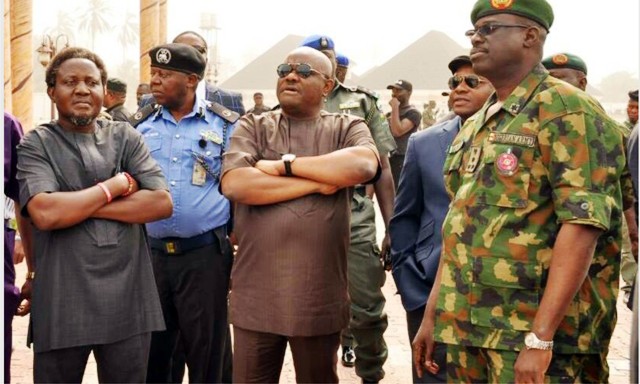
The Rivers State Governor, Chief Nyesom Wike has placed a N200million bounty for information that will lead to the arrest of the perpetrators of the Omoku massacre.
Wike spoke, yesterday, after he led the Rivers State Security Council on a fact finding/sympathy visit to the families of the deceased.
He also visited those injured during the attack.
The governor also visited the sites of the crime where he received briefing from the Nigerian Police Area Commander, Mr Mike Nwafor and the Ogba/Egbema/Ndoni Local Government Council Caretaker Chairman, Mr Osi Olisa.
He said: “We have placed N200million bounty for relevant information that will lead to the arrest of all those involved in this unfortunate act of violence.
“Anybody who is connected to this crime in any way will have his/her houses forfeited to the government. This place has been peaceful before this unfortunate mayhem.
“We will not allow another case of this violence. We have mobilised the security agencies to take the battle to the perpetrators”.
Wike said all those linked to the Omoku violence will face the full weight of the law.
“You cannot shed innocent blood and go free. We are working with all the security agencies to do everything possible to arrest the perpetrators. They must pay for this”, he said.
The governor commiserated with the families of the deceased, saying that the state government will support them in burying their loved ones.
He added that the state government will also settle the medical bills of those receiving treatment at different hospitals.
He said: “I am pained by this unfortunate mayhem. Enough is enough.”
The governor and the service commanders also visited the residence of wanted cultist, Don Danny where the Rivers State governor commended security agencies for working hard to improve the security of the state.
Also speaking, Chairman of Ogba/Egbema/Ndoni Local Government Area, Mr Osi Olisa informed the governor that 17 persons lost their lives as a result of the attack.
In an interview, Prophetess Comfort Ordu, who lost her husband and three children, said they were dragged out of their home and killed by the perpetrators.
Some of those murdered in cold blood include: Favour Odili, Saviour Amirinze, Augustine Ordu, Precious Ordu, Wisdom Ordu, Jennifer Ohia and Innocent Ohia.
Others are: Reuben Idogu, Baby Idogu, Ngozi Ogbuanukwu, Oyi Ogadinma, Nwagaego Ogadinma and Uche Onige.
The governor was accompanied to Omoku by the Commander Officer, 6 Division of the Nigerian Army, Brig-Gen A.A. Bande, the Commander of Joint Task Force, Col M.N. Madi, Rivers State Deputy Commissioner of Police, Ahmed Magaji and Rivers State Director of the Department of State Services, Mr Tosin Ajayi.
However, reactions have trailed the ugly incident that resulted in the killing of the son of Chief Eze Maziri and 16 others by unknown gunmen in Omoku Town, with Rivers people expressing shock and dismay at the dastardly act.
Maziri, in an interview with The Tide, said his son was returning from the New Year church service in the early hours of Monday, when the gunmen struck and killed him and his friend, among others.
The chief denied insinuations that his son belonged to any cult group.
“I never knew that such an unfortunate thing could ever happen to my son or any member of this community, and at the end, people say because they were not in the house at that hour of the day. Look at the number of corpses lying there, and we don’t know how it all happened.
“My son does not belong to any cult group. He was rather a very devout Christian. If people are claiming and making insinuations that he belonged to a cult group, what about his friend and the other 15 people bringing the number to 17 killed in cold blood on their way from church?”, Maziri asked.
In his reaction, the Rivers State Police Command Public Relations Officer, DSP Nnamdi Omoni stated that the police are aware of the incident but have not established a clear motive behind the killing of the people in Omoku.
Omoni stated further that investigations were underway to unravel the circumstances surrounding the incident, adding that the police would come up with details that led to the killings in the area soon.
The police image maker noted that the number of casualties cannot be confirmed at the moment.
Omoni said: “I can confirm the incident, but at the moment, we cannot confirm the conflicting number of casualties.
“The Deputy Commissioner of Police in charge of Operations and other tactical heads have been mobilised there to restore peace.
“The Commissioner of Police (Ahmed Zaki) has launched a manhunt for the bandits to ensure they are arrested and prosecuted.
“When the DCP and the teams conclude their investigations, we will know the total number of people involved,” Omoni added.
“Investigations are ongoing, and we don’t want to speculate, but for now, we have heard so many stories, some said they were unknown gunmen, but investigations will unravel what actually happened”.
It was gathered that the unknown gunmen had operated at two different locations, Kirigani and Oboh axis of Aligu of Omoku, in a coordinated attack.
The killers opened fire on Christians that were returning from different churches around 12: 20a.m., after successfully crossing over to the New Year, and killed the number of persons.
It was gathered that over 26 persons were shot in the attack, 14 persons died on the spot, with 12 hospitalised.
Three persons among those hospitalized were later said to have died from gunshot injuries.
Meanwhile, the Rivers State Government has taken Minister of Transportation, Chibike Rotimi Amaechi to the cleaners over his comments that the Omoku violence which led to the death of innocent Rivers indigenes was because Rivers State Governor, Chief Nyesom Wike was arming militants.
Reacting to Amaechi’s comments, the state Commissioner for Information and Communications, Barr Emma Okah described the comments as false, saying, it was an infantile attempt by Amaechi to gain political mileage from the senseless killings of innocent Rivers indigenes.
The statement reads:
Our attention has been drawn to the regrettable indictment of federal security agencies by the Minister of Transportation, Mr Chibuike Rotimi Amaechi who claimed that the Omoku violence which led to the death of innocent Rivers indigenes was because Rivers State Governor, Nyesom Ezenwo Wike was arming militants.
For the avoidance of doubt, Amaechi’s statement is false and an infantile attempt to gain political mileage from the senseless killings of innocent Rivers indigenes.
Over the last few days, there have been nationwide upsurge of violence, leading to the unfortunate deaths of Nigerians. Is the Minister of Transportation, Rotimi Chibuike Amaechi claiming that in all these instances, the governors of the respective states armed the killers?
In Southern Kaduna, several persons including a traditional ruler and his pregnant wife were killed. In Kwara State, a new year violence claimed several lives. In Yobe State, Boko Haram insurgents killed 5 soldiers while several community youths lost their lives.
Also in Lagos State, Badoo cultists killed a family of five, while over the last few days, Fulani herdsmen have killed scores of innocent Nigerians in Benue State.
We need not mention the scores killed over the last two weeks in Plateau, Adamawa and Zamfara States by Fulani herdsmen.
It is regrettable that the chief financier of APC National campaign would politicize a security challenge, effectively domiciled at the doorsteps of Federal Security agencies.
The fact that he made such statement at preccints of the Presidential Villa is a sad commentary.
For the records, Rivers State Governor, Nyesom Ezenwo Wike has funded and equipped security agencies in the state more than any other state governor has done. Rather than being commended for the sacrifice, ingrates like Amaechi see nothing in the genuine efforts of a patriotic leader, which Nyesom Ezenwo Wike represents.
In another development, President Muhammadu Buhari has condemned, in strong terms, killings of innocent persons in Omoku, Rivers State and traditional ruler, the Etum Numana, Dr. Gambo Makama, and his wife, in Sango Local Government Area of Kaduna State in the New Year.
President Buhari described the acts as ‘shocking and outrageous, reprehensible and unacceptable’, insisting that perpetrators must be brought to book.
In a statement by the Senior Special Assistant on Media and Publicity, Garba Shehu, President Buhari directed law enforcement agencies in both states to intensify their current efforts in order to speedily bring the perpetrators to face the wrath of the law.
“I have always maintained that nothing justifies the taking of the life of an innocent person,” the president said, adding that “people in our communities must learn to live peacefully.”
He appealed to the communities affected not to embark on reprisal attacks, but allow the security agencies to carry out comprehensive investigations to properly punish the culprits.
He commiserated with the families of the victims and wished the injured faster recovery.
Chris Oluoh & Susan Serekara-Nwikhana



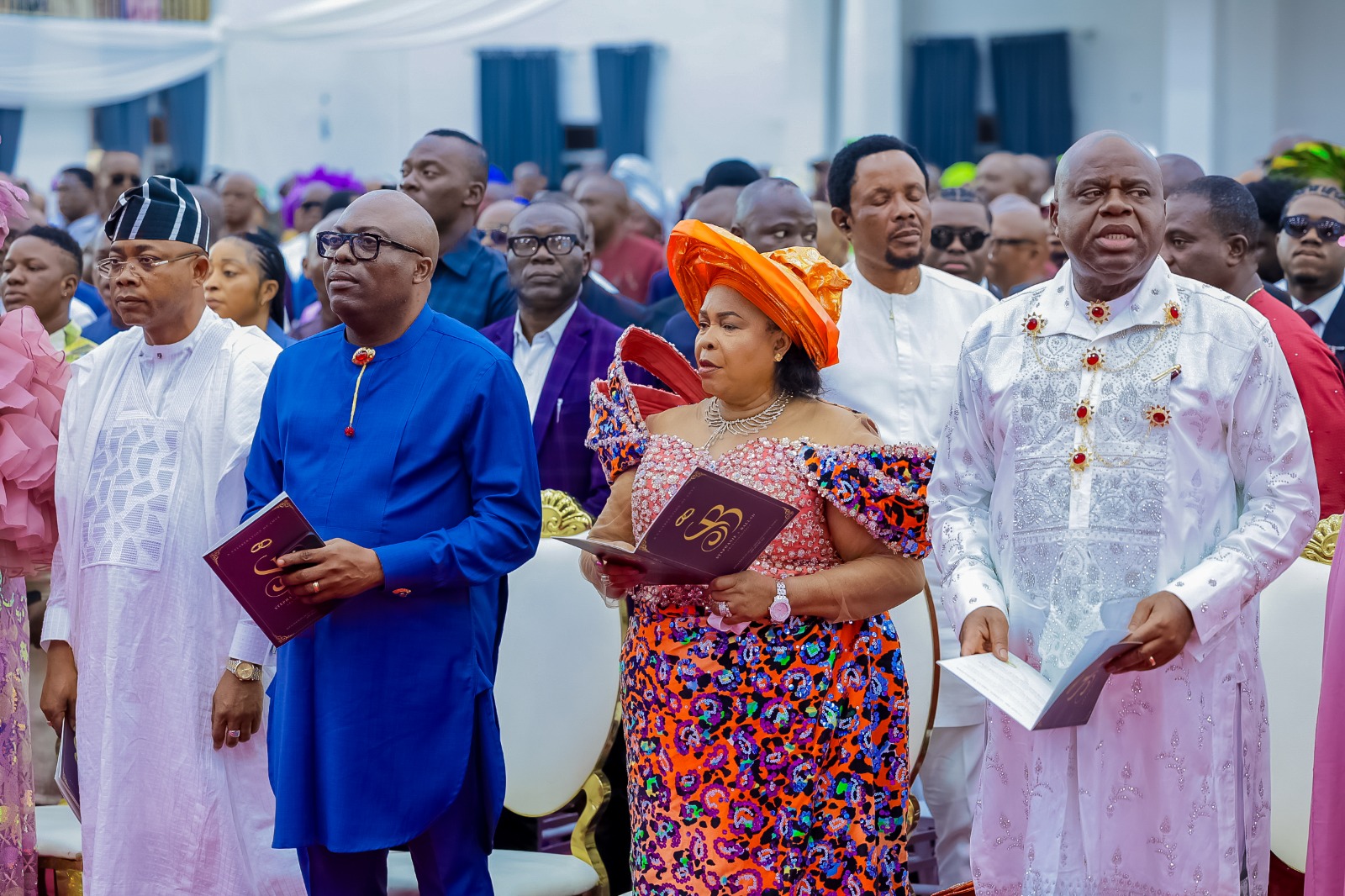
Rivers State, Sir Siminalayi Fubara, has assured members of the National Youth Service Corps (NYSC) of his administration’s commitment to supporting and strengthening the scheme in the State.
Fubara gave the assurance last Friday at the NYSC permanent orientation camp, Nonwa-Gbam, Tai Local Government Area in the State, during the swearing-in ceremony of 2026 Batch B Stream II orientation course.
Represented by the Permanent Secretary, Cabinet Bureau, Office of the Secretary to the State Government, Dr. Promise Oguzie, the governor said the State Government would remain intentional in providing the necessary support to improve the NYSC scheme and enhance the experiences of corps members deployed to the state.
He charged the corps members to be role models and quality nation-builders in their service to the good people of Rivers State in particular, and Nigeria at large.
“I charge you to be exemplary, dedicated and committed in all you do. Take full advantage of all the camp programmes and activities to enrich yourselves”, he said.
In his welcome address, the State Coordinator of NYSC in Rivers State, Mr. Moses Oleghe, urged corps members to see their deployment to Rivers State as a “veritable opportunity to make meaningful contribution to the growth of the State in particular and Nigeria at large.”
He further charged them to serve with all sense of “integrity, discipline, and the fear of God, especially when they will be engaged as INEC ad-hoc staff that will conduct the 2027 general elections.”
A total of 3,584 corps members composed of 1,421 males and 2,163 females were sworn in by the Chief Judge of Rivers State, who was represented by Justice Godspower Aguma.

Governor of Rivers State, Sir Siminalayi Fubara, says Nigeria needs God-fearing leaders for the nation to move in the right direction and make meaningful progress.
The Governor stated this yesterday when he received in audience, the World President of the Seventh Day Adventist Church, Pastor Erton Kohler; his wife, Andriene Marques Kohler; daughter Mariana Marques Kohler and a retinue of ministers of the church at Government House, Port Harcourt.
Fubara who hailed the Seventh Day Adventist Church for its contributions to education and the grooming of future leaders in Nigeria, expressed delight that the Church had over the years, been investing in education at various levels and currently runs two universities in the country.
He commended the church for not only using its institutions to spread the gospel of Christianity but to groom future leaders for the country.
According to him, religion should not be just about defending one’s faith, but also making meaningful impact on the lives of the people.
He said that by floating these educational institutions, the church has demonstrated capacity to support Nigeria in the task of producing not only educated people but a breed of God-fearing leaders.
“Our country is where it is today because we lack the fear of God. If you have the fear of God, there should be a limit to what you can do because you understand the supremacy of God. But when God is not in your equation, you’ll go beyond the line and that is what has brought us to where we are today.
“So, I feel very happy that you are contributing to the development of our future leaders in this country. We need the right people being in the right place; prepared properly with good minds; that is what we need, not just in Nigeria but round the whole world.,” he said.
Governor Fubara further observed that the absence of God-fearing people in high places to take the right decisions that could impact positively on the society, has also given rise to other problems such as social inequality, poverty, corruption and criminality. According to him, Nigeria needs a system where the average parent could afford quality education for their children and a guarantee that upon graduation, the average child will have the capacity to compete favourably with anybody, anywhere in the world.
“If we have a situation where the little money that you’re being paid as wage can also afford you quality healthcare and after working at least for 15-20 years, you have a roof over your head, tell me why you should be involved in any kind of crime? At that point, you’ll feel secured and this attitude of insecurity about the future that leads to all the social vices we have today won’t be there,” he said.
Governor Fubara expressed appreciation to the delegation for the visit and for their prayers for Rivers State, assuring them of his continued support for their programmes in the state.
Leader of the delegation and World President of the Seventh Day Adventist Church, Pastor Erton Kohler said he was in Nigeria for a special conference of the church during which thousands of the church’s ministers will be undergoing an empowerment programme to further equip them for the task of herding their flocks and serving the society.
He expressed gratitude to the Governor for the warm reception accorded his entourage, saying the memory of the visit will linger in his mind for a lifetime.
Kohler disclosed that the Church has over twenty -four million (24,000,000) members and more than 182,000 places of worship, spread across 212 countries of the world.

The Rivers State House of Assembly has approved the 2026–2028 Medium Term Expenditure Framework (MTEF) submitted by Governor Siminalayi Fubara.
This reaffirms the lawmakers’ commitment to enacting laws and taking legislative actions geared towards the overall development of the State.
The Assembly gave the approval during its Second Legislative Sitting of the Fourth Session held last Friday.
Speaking on the MTEF document during plenary, the House Speaker, Rt. Hon. Martin Amaewhule, noted that by the provision of Section 10(1)(b) of the Rivers State Fiscal Responsibility Law No. 8 of 2010, the MTEF ought to have been laid before the House in September 2025.
Amaewhule explained that traditionally, the document is expected to be presented four months before the commencement of the next financial year and immediately after the expiration of every three-year fiscal cycle.
He, however, stated that in the interest of the State and its people, the House considered it necessary to deliberate on the document, describing it as a precursor to the 2026 Budget Estimates.
The Speaker expressed concern that the year had already progressed significantly before the presentation of the framework.
During deliberations on the document, members examined the assumptions and projections contained in the MTEF and observed that strict adherence to the outlined fiscal parameters would ultimately serve the interest of Rivers people.
The lawmakers maintained that effective implementation of the framework would promote prudent financial management and enhance developmental planning across the State.
Following the debate and positive consideration by members, the Speaker put the question to the House and members voted overwhelmingly in support of the approval of the MTEF.
Meanwhile, during the same sitting last Friday, the House also received a petition from the Chairman of Obio/Akpor Local Government Council, Dr. Gift Worlu.
The petition was presented by the member representing Obio/Akpor Constituency II, Hon. Emilia Amadi.
According to the petition, concerns were raised over an imminent security breach, threats to lives, destruction of property and alleged forceful takeover of property by some lawless persons within parts of the Local Government Area.
Presenting the petition before the House, Hon. Amadi appealed to the lawmakers to revisit the matter and take necessary steps aimed at safeguarding lives and property in the affected communities.
The House is expected to further deliberate on the petition and consider measures to address the concerns raised in order to sustain peace and security in the area.
King Onunwor
-

 News4 days ago
RSG Targets Nine Million Residents in Mosquito Net Distribution Campaign
-

 Oil & Energy4 days ago
Aiyedatiwa Signs New Electricity Bill
-

 Oil & Energy4 days ago
NLNG Commissions Research And Innovation Centre In RSU
-

 Maritime4 days ago
Marine Minister Commends President Tinubu On NPERA Bill Assent
-

 News4 days ago
KenPoly Holds Eight Convocations, August 29
-

 News4 days ago
RSG Begins Another Phase of Projects Commissioning Today
-

 News4 days ago
RMAFC Completes Revenue Sharing Review, Proposes New Pay
-

 Maritime4 days ago
NAGAFF Petitions IGP Over Alleged Maritime Police Harassment