
News
We’ll Rely On Three Grounds To Win At S’Court -PDP

Lawyers for the presidential candidate of the Peoples Democratic Party (PDP), Alhaji Atiku Abubakar, and those for the party, yesterday, argued that they would rely on three grounds to get the Supreme Court to overturn President Muhammadu Buhari’s last Wednesday victory at the Presidential Election Petitions Tribunal.
Atiku and his party had said they would be challenging the unanimous judgement by the five-man tribunal that confirmed Buhari’s victory at the February 23 presidential poll.
The former vice president went to the tribunal seeking to overturn the victory of the candidate of the All Progressives Congress (APC), who was running for a second term in the February 23 presidential poll.
His petition did not succeed for failing to prove allegations of irregularities against the Independent National Electoral Commission (INEC), Buhari and the APC, the tribunal declared in a judgement that lasted for over eight hours, last Wednesday.
In a unanimous judgement delivered by Justice Mohammed Garba, the five-man panel held that all the five issues raised by the petitioner against the respondent were not proved.
But shortly after the verdict, Atiku and the PDP vowed to go to the Supreme Court to challenge the decision, but did not give the date their appeal would be filed.
Section 134(3) of the Electoral Act, 2010 provides that an appeal from the tribunal would be heard and disposed of within 90 days from date of the judgement.
Arguing their case, Atiku’s lead counsel, Levy Uzoukwu, SAN, said there were a number of grounds upon which the appeal would be successfully challenged.
Uzoukwu said that contrary to the position of the tribunal that you don’t need to attach copies of certificates listed, the INEC Form CF001 clearly states that you must attach evidence of qualifications before you swear to an affidavit.
He added that the chairman of the tribunal also erred by his statement that “for Army to say so, it could be inferred that he submitted his certificates upon his enlistment. Interestingly, none of the three respondents raised that point in the trial. So, the court generated that, and that would tell you the extent the justices went.”
“Just look at the issue of the server, which has now thoroughly embarrassed them; the presiding justice unequivocally said the existence of the server was not proved. Now, the second justice, who gave the second judgement said that the petitioners recklessly hacked into the server and shamelessly presented the material to the court. This completely contradicts what the presiding justice said.
“That is not all, Justice Oseji came from another angle and said that the petitioners proved the issue of the server, and agreed with us that server is a storage device, which a computer is and that the INEC relied on our case and called no evidence. So, I just don’t understand.”
Another fundamental one, where we indicated that the areas put together, where elections did not take place, the total number of voters nullified the difference of the votes between Atiku and Buhari, they didn’t say one word on any of that.
“In this one, we subpoenaed the INEC, which brought Form EC40G, where on its own tabulated areas, election did not take place and the registered number of voters came to 2.7million, where elections were cancelled. We tendered this and addressed it copiously.
“We also tendered what they published on their website. I think that one was 2.6 million, where they organised supplementary elections for National Assembly, and elections were cancelled. It took place simultaneously with the presidential. Accreditation was also simultaneously by the same parties.
“At the point of voting, you go to the box for National Assembly. So, you cannot say that for presidential, election took place and for National Assembly, election did not take place in the same polling unit.
“We addressed all these issues. But they cleverly departed from it and not a word on it, and moved on as if nothing happened.
“We are going to articulate all these in our Notice of Appeal. We have 14 days and they have not given us the judgement because they said they were going to correct some errors,” he said.
Also speaking about the intention to challenge the judgement, counsel to Atiku, Mike Ozekhome, SAN, said several things were wrong with it, among which he said were poor evaluation of evidence, non-evaluation of evidence, misplacement of exactly what the case of the petitioners is, and the fact of provisions of the Electoral Act being misinterpreted and misapplied.
“At the Supreme Court, there will be seven very good heads that will hear the appeal from here. There is no question about that; we will appeal the judgement,” he said.
The Minister of State for Niger Delta and one of the lawyers to the APC, Festus Keyamo, SAN, did not respond to calls and text message to him over the matter.
But one of the lawyers to Buhari, Sam Ologunorisa, SAN, said the appeal was expected, but added that it would help to enrich the country’s law.
“As lawyers, our opinions on issues of law and evaluation of facts arising therefrom are bound to differ. The presidential election petition and the issues so distilled will generate this type of reaction as the stakes are high.
“In all, our legal jurisprudence is bound to be richer and I hope the political class will learn one or two lessons and initiate appropriate reforms to deepen our democracy.”
Also, the National Publicity Secretary of the PDP, Mr. Kola Ologbondiyan, said the party was confident of winning at the Supreme Court.
Speaking to newsmen, yesterday, Ologbondiyan said the Supreme Court would dwell on the substance of the case and deliver justice.
“There are two levels of courts and we believe that the tribunal took over the responsibility of the respondent counsel by shopping for the cases they didn’t make. That is the position of our party, which was changed to law and jurisprudence.
“We believe that when we go to the Supreme Court, which is the highest court, we will take another look at the substance of the five issues the tribunal claimed to have addressed, and we believe that they would do justice on all the issues,” he said.
Similarly, the presidential candidate of the PDP, Atiku, has confirmed that his team and that of the party were working together to challenge the judgement.
Atiku’s special adviser on media, Paul Ibe, told our source in a telephone interview, yesterday, that his boss and PDP’s legal team were studying the judgement before taking the necessary action at the apex court.
Asked whether Atiku or his camp had confidence of winning at the Supreme Court, Ibe simply replied, “Let’s get there first. We are on the road. This is not about Atiku, it is about Nigeria and Nigerians. It is about our future and the need to reset our destiny. It is about creating jobs and making Nigerians better.”
Adding his view to the argument about going to the Supreme Court, a former director-general of the Nigerian Law School, Prof Tahir Mamman, said it was within the right of Atiku and the PDP to appeal against the decision of the tribunal.
He explained that the cost element of the petition may not be a problem for Atiku.
“It is okay if he appeals, but whether or not his appeal succeeds is a different matter. Nobody tried to predict what the Appeal Court would do earlier. But overall, if you look at the unanimous judgement of the court, it is a landmark decision; very comprehensive. All the issues were taken within the prism of the requirement provisions of the Electoral Act and the Evidence Act,” he said.
But Jibrin Okutepa, SAN, faulted the tribunal’s decision, saying it erred by claiming that the petitioners dumped electoral materials on the tribunal by not leading evidence through the makers.
“It is a misapplication of the principle in Duriminya v. C.O.P (Supra) to expect the petitioner to come and read afresh to the court the same evidence already contained in the exhibits, which were tendered and received without objection. The tribunal erred seriously by failing to see that forms EC8A and EC8B are statutory forms complete on their own as to their source and purport, and which cannot, therefore, be equated with ordinary documentary exhibits.
“It is, therefore, my contention that there is a need for our courts to reconsider their stand on the issues of who can tender certified true copies of public documents and the weight to be attached to it and the arguments that unless documents tendered are demonstrated, courts should regard them as dumping. If court cannot look at documents tendered and interpret the man making meaning out of it, then what is the duty of the court?” he queried.
Another lawyer, Abeny Mohammed, SAN, however, advised both parties in the matter to obtain copies of the judgement and study them before determining the next course of action.
A former Kaduna State governor, Alhaji Balarabe Musa, described the decision by Atiku to head to Supreme Court as the right decision, saying Buhari did same years back.
The elder statesman also said it was in the interest of Nigerians for the matter to go to the Supreme Court because that would show everybody that there is justice in the country.
“I think his decision to go the Supreme Court is right. He should do it for his own sake because he feels aggrieved. That is one. Secondly, even his competitor, Buhari, went up to the Supreme Court when he had the same problem. So, why can’t Atiku also go?
“Thirdly, it is even in the interest of Nigerians for the matter to go up to the Supreme Court because that will show everybody whether there is justice or not. The Supreme Court is supposed to be more articulate than the tribunal; therefore, it can do more justice.
“Finally, the outcome of the Supreme Court will enable Nigerians to know more about the law. Of course, in addition to this, I, therefore, say also that for me as an individual politician, there is no different between the PDP candidate, Atiku and the APC candidate, Buhari,” he said.
The Director, Centre for Democracy and Development (CDD), Ms. Idayat Hassan, toeing the line of Balarabe Musa, also argued that the tribunal, having given its reasons for the decision, the petitioner, Atiku and the PDP have a right to exhaust all remedies, and that is why they are going to the Supreme Court.
“However, the most important thing to happen is that our electoral jurisprudence must change. The burden of proof on the petitioner to prove his case may lead to the defeat of justice in the long run. We have to reach a point where it shouldn’t just be “he who asserts, must prove,” but also those who claim to have conducted elections must prove that they did it within extant regulations,” she said.
On his part, the Executive Director, Civil Society Legislative Advocacy Centre (CISLAC), Auwal Musa Rafsanjani, said the country was running a constitutional democracy, and under constitutional democracy, the courts must be obeyed.
“Whatever the feelings of any aggrieved party, they have to accept the verdict of the court, and if they strongly believe that they have a case, they can proceed to explore other democratic and legal means. We will not encourage anybody to do anything that is not within democratic norms.
“I think this is not really good because President Buhari’s victory was not challenged in 2015, and now in 2019, his election is being challenged, which means that there may be infractions in the conduct of the election. We appeal to Nigerians to remain calm and for President Buhari to face governance. He should also caution his aides, supporters and officials from making derogatory remarks or mockery of opponents.
“We should face governance now. The only thing that would ameliorate the disaffection of the people who felt otherwise is for Buhari to put tangible programmes that would deliver good governance and job security for the people. The president should be focused and make the anti-corruption efforts succeed,” he said.



The Socio-Economic Rights and Accountability Project (SERAP) has sued the Federal Government at the ECOWAS Community Court of Justice over alleged diversion, irregular expenditure and failure to account for N78.8bn allocated to cash-transfer and social-protection programmes.
SERAP, in a statement released by its Deputy Director, Kolawole Oluwadare, yesterday, said the allegations involved the Ministry of Humanitarian Affairs and Poverty Reduction, the National Cash Transfer Office and the National Social Safety Nets Coordinating Office.
The allegations were documented in the Auditor-General of the Federation’s 2024 Annual Report, published on August 7, 2026.
According to the report, the findings covered various periods between January 2023 and December 31, 2024.
In the suit, marked ECW/CCJ/APP/42/26 and filed last week, SERAP is seeking a declaration that the government’s failure to account for the funds violates Nigeria’s international human rights obligations.
The organisation is also asking the court to order the government to provide a comprehensive account of the questioned funds, investigate the alleged irregularities, recover any money improperly spent or diverted where established, and strengthen financial oversight of social-protection programmes.
SERAP argued that the alleged financial irregularities could undermine the rights of vulnerable Nigerians to social security and an adequate standard of living, including access to food, clothing and housing.
The statement party read, “The funds were intended to benefit over 3.2 million households across 35 states, whose access to financial assistance has been affected by the allegations made by the Auditor-General.”
The suit, filed by SERAP’s lawyers, Kolawole Oluwadare and Kehinde Oyewumi, stated that the government’s failure to investigate the allegations and recover any improperly spent funds violated its obligations to protect vulnerable households.
“The failure to investigate the N78.8 billion cash-transfer scandal, account for the questioned funds and recover any unlawfully spent amounts violates Nigeria’s obligations to protect the human rights of vulnerable households,” the suit partly read.
The organisation said it instituted the case to protect affected households and ensure accountability for public funds allocated for their benefit.
“SERAP brings this public-interest case to protect the interests of affected households and ensure accountability for public funds allocated for their benefit,” it stated.
The organisation maintained that cash-transfer programmes could help address extreme poverty and enable vulnerable people to meet their basic needs, but argued that the government had a duty to ensure the funds were properly managed.
“The right to social security cannot be effectively realised merely by establishing a formal cash-transfer programme where the State fails to maintain reasonable systems for identifying beneficiaries, maintaining records, reconciling disbursements, monitoring expenditure, investigating irregularities and remedying losses,” the statement further stated.
According to SERAP, the Auditor-General questioned approximately N33.751bn reportedly transferred to more than 3.2 million households across 35 states in 2023, noting that adequate records to verify the payments and reconcile beneficiary records were not provided.
The report also identified N36.744bn in payments allegedly made without prepayment audits, N4.616bn in unsupported expenditures, N350.182m for enrolment, N89.511m for store purchases and N17.422m in diesel advances.
SERAP said the suit was brought under Article 9(4) of the ECOWAS Court Protocol to protect affected households and ensure accountability for public funds intended for social protection.
“The issue is whether the government has discharged its obligations under applicable human-rights treaties to safeguard resources allocated for social protection, investigate documented financial irregularities, provide effective remedies and ensure that those resources are applied for their intended purposes,” it stated.
The organisation also cited the constitutional responsibility of the Auditor-General to audit and report on the public accounts of the Federation and the offices and agencies of the Federal Government, describing the findings in the annual report as important official records of public expenditure.
It relied on Articles 1 and 2 of the African Charter on Human and Peoples’ Rights, arguing that the government had obligations to give effect to protected rights and ensure that failures in administering social-protection programmes did not result in discriminatory exclusion or unequal access to benefits.
“The Nigerian government has the obligation to take effective measures to prevent and address corruption and related misuse of public resources. The government has failed to take appropriate measures in response to the allegations made by the Auditor-General”, the statement added.
SERAP said it had previously urged President Bola Tinubu and relevant authorities to account for the questioned funds, publish audit records, investigate irregular expenditures, recover any funds unlawfully spent or diverted and take appropriate action against those responsible.
Following the publication of the Auditor-General’s report, the organisation issued a public statement and sent a letter dated September 5, 2026, requesting action on the findings. It also sought payment and beneficiary records, verification documents and an explanation for the missing REMITA records.
“The deadline given to the government to address the Auditor-General’s findings had elapsed without adequate action,” it stated.
The organisation further cited Articles 1 and 21 of the African Charter, alongside Article 9 of the United Nations Convention against Corruption, as requiring effective measures to protect rights and resources, promote transparent public financial management, investigate irregularities and recover public funds where losses or improper expenditure were established.
SERAP also relied on the works of legal scholar Kolawole Olaniyan, including Corruption and Human Rights Law in Africa, published by Hart Publishing in 2014, and Ownership of Proceeds of Corruption in International Law, published by Oxford University Press in 2023. It said the publications provided persuasive academic authority on corruption’s effects on human rights, public resources, accountability and international legal remedies.
“SERAP accordingly submits that the Auditor-General’s findings cannot be treated merely as administrative irregularities where public funds allocated for social protection may have been lost, improperly spent or left unaccounted for, and the government fails to take effective corrective action,” the statement added.
SERAP is asking the court to direct the government to conduct an independent, prompt and effective investigation into the identified irregularities, recover public funds improperly spent, diverted or lost where established, and take appropriate legal or administrative action against those found responsible, in accordance with due process.
It also wants the government to strengthen financial accountability, beneficiary verification, auditing, reconciliation and oversight mechanisms to prevent a recurrence of the alleged irregularities and ensure that eligible vulnerable households receive their intended benefits.
The organisation is further seeking an order restraining the government from administering or disbursing cash-transfer and social-protection funds without adequate accountability and oversight mechanisms, as well as appropriate remedies for any established adverse effects on beneficiaries’ protected rights.
No date has, however, been fixed for the hearing of the suit.
The Federal Government has released N38.93bn to 166 public tertiary institutions nationwide under the Needs Assessment Revitalisation Fund to address infrastructure deficits and improve teaching and learning facilities.
The intervention covers 79 universities, 46 polytechnics and 41 colleges of education, with universities receiving the largest share of the allocation.
The Federal Ministry of Finance disclosed this in a statement issued on Sunday by its Head of Media, Efe Ovuakporie, explaining that the funds would support approved projects in beneficiary institutions.
The statement read, “The Federal Government has disbursed N38.93bn to 166 public tertiary institutions nationwide under the Needs Assessment Revitalisation Fund.”
According to the ministry, the university component accounts for N28.5bn, while N5.8bn has been allocated to polytechnics and N4.7bn to colleges of education.
According to the ministry, the university component accounts for N28.5bn, while N5.8bn has been allocated to polytechnics and N4.7bn to colleges of education.
An analysis of the allocations by PUNCH Online showed that universities would receive approximately 73.2 per cent of the announced N38.93bn intervention, making them the largest beneficiaries.
Polytechnics would account for about 14.9 per cent, while colleges of education would receive approximately 12.1 per cent.
The ministry explained that the intervention was intended to address longstanding infrastructure challenges in public tertiary institutions and support the implementation of agreements reached between the Federal Government and the Academic Staff Union of Universities.
It stated, “The intervention forms part of the Federal Government’s efforts to address the needs of public universities and support the implementation of agreed measures under the Memorandum of Understanding between the Federal Government and the Academic Staff Union of Universities.”
The Needs Assessment Revitalisation Fund is designed to support improvements in institutional infrastructure and other identified needs, particularly in public universities, where inadequate facilities have remained a recurring concern in negotiations between the government and academic unions.
The ministry said the latest disbursement would enable beneficiary institutions to begin new projects or continue previously approved interventions aimed at improving their operational capacity.
“The funds are expected to enable beneficiary institutions to commence or advance approved projects addressing critical infrastructure and other identified institutional needs, with the overall objective of strengthening the quality of tertiary education in Nigeria,” it added.
The government also emphasised the need for coordination among the Federal Ministry of Finance, Federal Ministry of Education and beneficiary institutions to ensure that the released funds produced measurable improvements.
It noted that effective collaboration would be necessary to translate the financial intervention into improved infrastructure, institutional capacity and learning conditions.
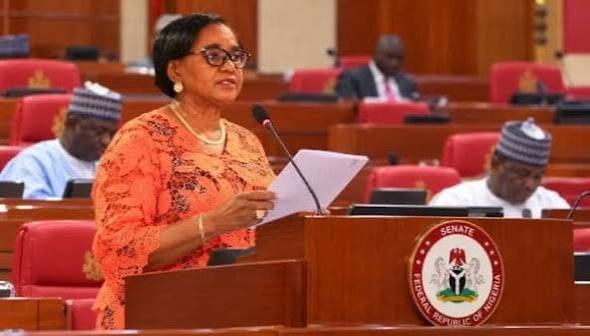
The bill to approve the establishment of the Federal University of Agriculture, Emughan, Abua-Odual Local Government Area of Rivers State has passed third reading.
The Bill, titled “A Bill for an Act to Amend the Federal Universities of Agriculture Act, Cap. F22, Laws of the Federation of Nigeria, 2024” was sponsored by Senator Ipalibo Harry Banigo representing Rivers West Senatorial District.
The bill seeks to amend the existing Federal Universities of Agriculture Act to provide for the establishment of the proposed institution in Emughan community in Rivers State.
The passage of the bill by the Senate marks a significant legislative milestone towards the establishment of the proposed university.
When established, the institution is expected to expand access to higher education, promote agricultural research and innovation, develop skilled manpower, and contribute to the economic growth of Rivers State and Nigeria at large.
According to a statement made available to The Tide, the bill, having passed the Third Reading in the Senate, will now proceed to the House of Representatives for concurrence as part of the legislative process towards its enactment into law.
The bill underscores Senator Banigo’s commitment to advancing educational opportunities and strengthening agricultural development in Rivers State.
By: Kevin Nengia
-
 Niger Delta15 hours ago
Diri Restates Stance On Lagos-Calabar Coastal Highway
-

 Niger Delta15 hours ago
C’River, NUJ Pay Tribute To Late Guardian Editor
-

 News16 hours ago
NDLEA Recovers Tons Of Illicit Drug Consignments In Nine States
-
 Opinion15 hours ago
Checking Voter Apathy In Nigeria’s Electoral Process
-

 Sports12 hours ago
Nigerian Trio Target Titles At PFL Africa Finals
-
 Education13 hours ago
FCE Yola Graduates 3,555 Teachers , Seeks Upgrade to University
-
 Politics12 hours ago
2027: DICKSON’S EX-ALLY VOWS TO WORK AGAINST NDC INTEREST IN BAYELSA
-
 Politics12 hours ago
2027: GROUP PLEDGES 40,000 SUPPORTERS FOR COALITION CANDIDATES IN RIVERS