
Politics
Obi Only Came Third In 2023 Presidential Poll -Soyinka

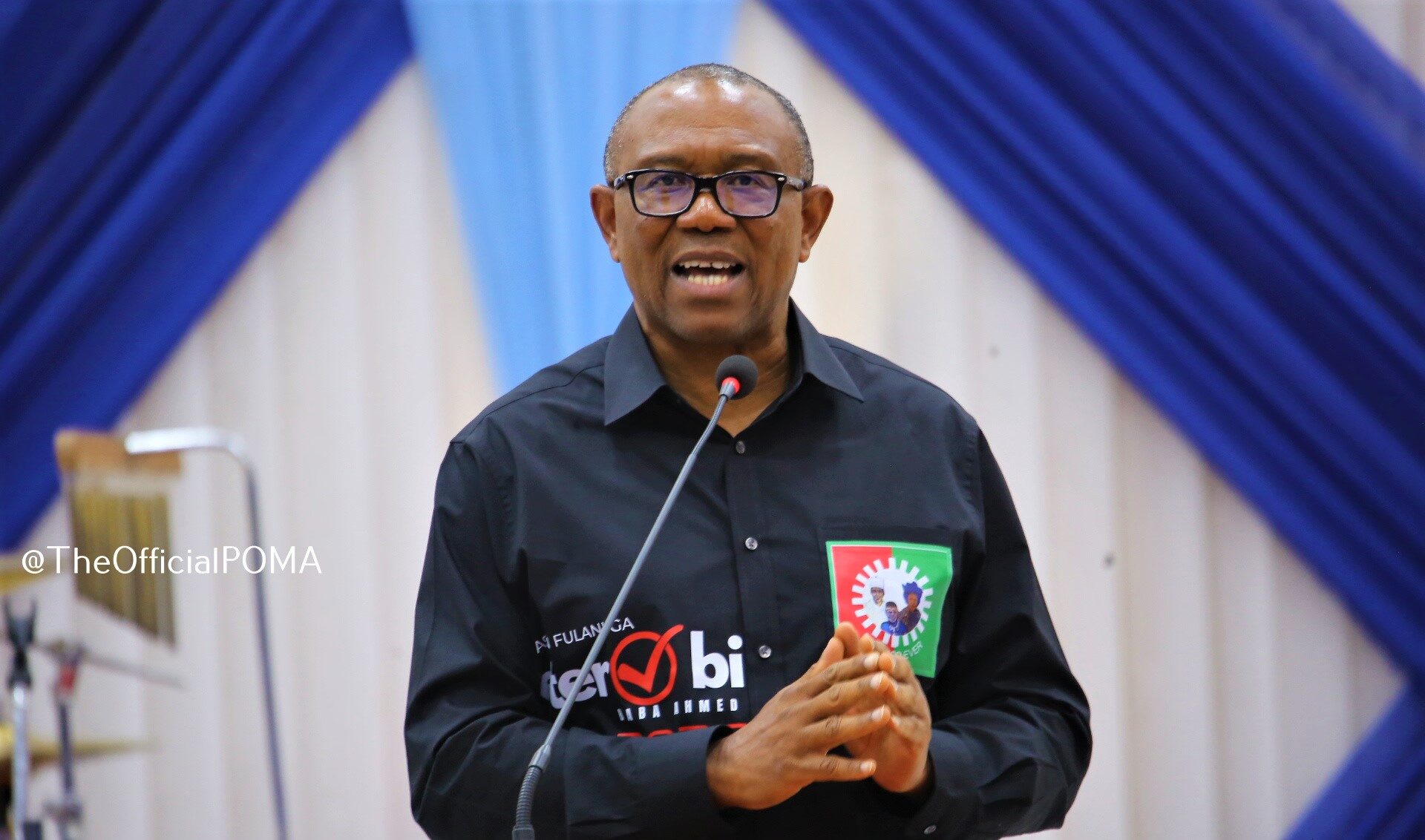
Nobel laureate, Wole Soyinka, says the leadership of the Labour Party (LP) knew that the presidential candidate in the February 25, 2023 election, Peter Obi, lost the poll.
Soyinka accused the leadership of the opposition party of trying to force “a lie” on Nigerians, especially youths, that Obi won the election.
The Nobel laureate spoke at an event titled “The Lives of Wole Soyinka: A Dialogue” organised by Africa in the World.
While speaking at the event which took place in Stellenbosch, South Africa, on Wednesday, Soyinka was asked to react to his comment against LP vice-presidential candidate, Datti Baba-Ahmed, after the general election.
Soyinka said the truth mattered to him, noting that many people always look for shortcuts.
The Nobel laureate said he was armed with facts when he invaded a radio station in Ibadan in 1965.
He added that he was not relying on “third-hand information” about the result of the 1965 regional election.
Soyinka accused the LP of taking over the organised labour movement in the build-up of the 2023 election.
He noted that Obi achieved “something remarkable” by breaking the monopoly of power established by the All Progressives Congress (APC) and the Peoples Democratic Party (PDP).
“This recent election – two things happened first of all. One party took over the labour movement, which is not my favourite movement, and then it became a regional party,” he said.
“Whereas it was a marvellous breach into the established two camps, Peter Obi achieved something remarkable there, that he broke that mould. However, he did not win the election.
“I can say categorically that Peter Obi’s party came third not even second and the leadership knew it but they want to do what we call in Yoruba ‘gbajue’, that is force of lies.”
Soyinka also alleged that the LP leadership attempted to mobilise young people to protest against the outcome of the election on the “banner of lies and deceit”.
“They were going to send some of the hardliners, proud young people into the street to demonstrate,” he said.
“I’m also ready to be among such demonstrators but only on the banner of truth not on lies, and deceit.
“This party wanted the same thing (referring to 2011 post-election violence) to happen on the basis of a lie and we find this vice-presidential candidate on television boasting, insisting, threatening and trying to intimidate both the judiciary and the rest.
“What kind of government will result from that kind of conduct? In addition, they did not know this but they were being used.
“Before the election, there were certain clandestine forces, including some ex-generals, who were already calling for an interim government before the elections began.
“Some of them were known figures, including a proprietor of a university calling for an interim government before the election took place”, Soyinka said.
In March, Soyinka and LP were at loggerheads over comments made by Baba-Ahmed on the outcome of the presidential election.
On March 22, Baba-Ahmed, in an interview with Channels TV, said the country has no president-elect despite the declaration of Bola Tinubu, flagbearer of the All Progressives Congress (APC), as the winner of the election by the Independent National Electoral Commission (INEC).
Baba-Ahmed said Tinubu should not be sworn in as president because he “did not meet requirements of the law”.
Reacting to the comment, Soyinka said the LP vice-presidential candidate’s words contained “fascistic language” and that he has “never heard anyone threaten the judiciary on television the way Datti did”.



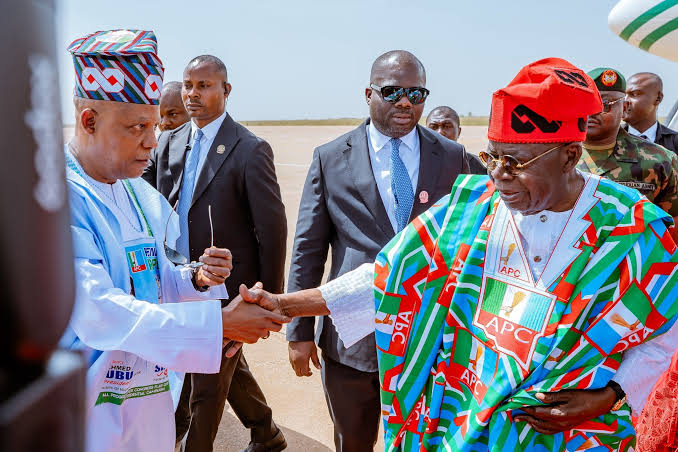
The campaign rally, held at the Kaduna Township Stadium, attracted Vice-President Kashim Shettima, APC governors, party leaders, federal and state lawmakers, political stakeholders and supporters from across the country.
The flag-off marks the beginning of the APC’s drive to secure a second presidential term for President Tinubu, with the party expected to promote its achievements, defend its economic reforms and outline its policy priorities under the proposed Renewed Hope 2.0 agenda.
Kaduna’s selection for the campaign launch underscores the strategic importance of the North-West, a region with a substantial voting population and considerable influence on presidential election outcomes.
The APC faces a significant challenge in Kaduna, where the Peoples Democratic Party’s presidential candidate, Alhaji Atiku Abubakar, defeated President Tinubu in the 2023 election. The rally therefore provides the ruling party an opportunity to strengthen its grassroots structures and regain electoral support in the state.
Addressing supporters, Vice-President Shettima appealed to Northern voters, highlighting President Tinubu’s political relationships with prominent Northern leaders, including Alhaji Abubakar, Mallam Nuhu Ribadu and the late President Muhammadu Buhari.
The Vice-President’s appeal reflects the APC’s determination to consolidate its support in the North as the party intensifies preparations for the presidential contest.
The Renewed Hope 2.0 agenda is expected to feature prominently in the campaign, providing a platform for President Tinubu to explain his administration’s economic policies and outline plans for another term.
However, the President’s record on economic reforms, rising living costs, petrol prices, employment, infrastructure and insecurity is expected to attract considerable scrutiny during the electioneering period.
-

 Niger Delta12 hours ago
Diri Restates Stance On Lagos-Calabar Coastal Highway
-

 Niger Delta12 hours ago
C’River, NUJ Pay Tribute To Late Guardian Editor
-

 News13 hours ago
NDLEA Recovers Tons Of Illicit Drug Consignments In Nine States
-

 Opinion11 hours ago
Checking Voter Apathy In Nigeria’s Electoral Process
-

 Sports8 hours ago
Nigerian Trio Target Titles At PFL Africa Finals
-
 Education9 hours ago
FCE Yola Graduates 3,555 Teachers , Seeks Upgrade to University
-
 Politics9 hours ago
2027: DICKSON’S EX-ALLY VOWS TO WORK AGAINST NDC INTEREST IN BAYELSA
-
 Politics9 hours ago
2027: GROUP PLEDGES 40,000 SUPPORTERS FOR COALITION CANDIDATES IN RIVERS