Business
Total Nigeria Shareholders Rejoice Over N4.75bn 2018 Dividend


Total Nigeria Plc shareholders have unanimously endorsed the payment of N4.75 billion final dividend recommended by the company for the financial year ended Dec. 31, 2018.
The Tide source reports that the shareholders gave the approval at the company’s 41st Annual General Meeting (AGM) held in Lagos.
The dividend translated to N14 per share subject to the deduction of appropriate withholding tax.
Reports say that the company had earlier distributed the sum of N1.02 billion as interim dividends, representing N3 per share.
Speaking at the meeting, Mr Sunny Nwosu, Founder, Independent Shareholders Association of Nigeria, commended the company for consistent and enhanced dividend in spite of unfriendly operating environment.
Nwosu said that the company had paid regular dividend in spite of proliferation of taxes, late payment of subsidy and high cost of operation.
He, however, called for full deregulation of the downstream sector to boost employment rate as well shareholders return on investment.
The shareholder activist said that government should deregulate the sector and allow operators to compete favourably.
Nwosu said that government interference in the sector was affecting shareholders return on investment.
He said that government should consider the shareholders who always expect increased dividend at end of every financial year.
Also speaking, Mr Matthew Akinlade, a shareholder, said that government as a regulator should not be competing with operators in the downstream sector.
Akinlade said that unemployment rate would continue to grow if government continues to muscle power with operators in the downstream.
Responding, Mr Stanislas Mittelman, Total Nigeria Chairman, described 2018 as a challenging year for the company, downstream petroleum sector and the country at large.
Mittelman said that some of the key challenges were security issues, delayed payment under the Petroleum Support Fund scheme, high cost of investment, reduced capital inflows and weakening crude oil prices.
He said that the company had continued to experience sustained pressure on its cash flow due to late payment of subsidies resulting in huge financial expenses.
“All of these add significant costs to doing business, had negative impact on our sales and affected our profitability,’’ he said.
The chairman said that the company had entered into a storage arrangement in Lagos area which would allow it capture opportunities in line with its import and logistics optimisation strategy.
“We signed a 15 year power purchase agreement with a manufacturing company in Ogun State to provide 999kWp solar hybrid solution,’’ he added.
Mittelman said that the company would continue to strengthen its solar business to boost profit as well as increase dividends payable to shareholders.



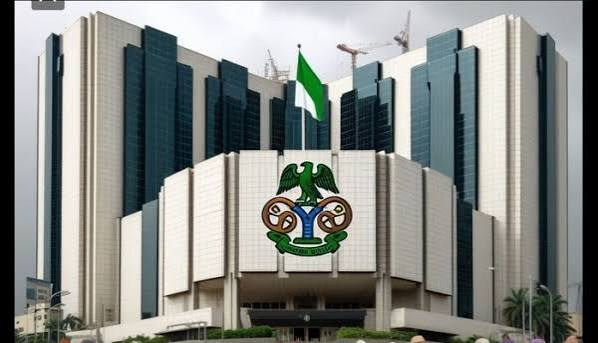
Credit to Nigeria’s private sector rose to N83.26 trillion in June 2026 from N81.04 trillion in May, signifying a positive balance of N2.22 trillion month-on-month.
Year-on-year, the figure represents a nine per cent increase compared with the N76.13 trillion recorded in June 2025. The latest figures come as the CBN continues to balance efforts to control inflation with the need to support economic growth and expand credit to businesses.
The CBN data shows that credit to Nigeria’s private sector increased by approximately 2.74 per cent month-on-month between May and June 2026. Also, the CBN data noted that credit to the government fell slightly to N40.03 trillion from N40.38 trillion. Other assets, net, dropped to N10.76 trillion from N12.63 trillion.
The credit surge signifies sustained growth in lending to businesses and other private-sector borrowers during the month. The rise in private sector credit was recorded alongside an increase in net domestic credit, despite declines in credit to government and other assets.
Further analysis of the report says that compared with June 2025, private sector credit rose by about N7.13 trillion yea-on-year but net domestic credit increased by approximately N1.87 trillion during the month.
The CBN’s relatively tight monetary policy stance notwithstanding, more banks still loaded funds to the private sector within the period. The Monetary Policy Committee (MPC) of the Central Bank of Nigeria (CBN) held its 306th meeting on July 20 and 21.
The Committee reviewed recent developments in the global and domestic economies, assessed emerging risks to the outlook and considered their implications for monetary policy and retained all rates.
The Committee decided to retain the Monetary Policy Rate at 26.5 per cent; the Standing Facilities Corridor around the MPR at +50/-450 basis points and retain the Cash Reserve Requirement (CRR) for Deposit Money Banks at 45.00 per cent, Merchant Banks at 16.00 per cent, and non-TSA public sector deposits at 75.00 per cent.
The MPC decision means that credit extension in the private sector will likely continue to rise because of rising confidence in the sector and calls by stakeholders for banks to invest in the private scetor instead of government securities.