
Nation
THE STATES

Asaba
Delta State House of Assembly, Thursday, received a list of twelve nominees for appointment as commissioners into the Delta State Executive Council from Governor Emmanuel Uduaghan.
The state governor, last week, sacked eleven commissioners, which sources revealed were not loyal to his course of returning as governor in 2011.
Governor Uduaghan had in a letter addressed to the Speaker of the House noted that the appointment is aimed at strengthening the capacity of the State Executive Council for better and greater service delivery to the people of the state.
Names of the commissioners were also contained in the letter which was read on the floor of the House. They include Mr. Bello Orubebe, Dr. Chris Oghenechovwen, Mr. Victor E. Otomewo, Mr. Frank Omare, Mrs. Juliet Oti Agoba and Anthony Akpomiemie.
Others are Mr. Fred Majemite, Mr. Azuka Osakwe, Mr. George Ugboma, Mr. Emmanuel Eboh, Dr. Onochie Okonkwo and Mr. Pat Mozea.
The Commissioners that were sacked last week are Mr. Abraham Bobor, former Commissioner for Housing, Paul Osaji (Works), Mrs. Elizabeth Uvoh-Gardner (Primary Education), Gilbert Benafa (Transport), Mrs. Chinwe Monu-Olarewaju (Commerce/Industry), Timinimi George (Water Resources), Roland Eyime (Science/Technology), Dafe-Akpedeye (Attorney-General/Justice), Champion Kpateghe (Special Duties, Government House) and Dr. Tab-Ogaranya Tabowei (Agriculture).
Jos
The authorities of 3 Amoured Division of Nigerian Army, Jos, have sentenced a soldier to 56 days imprisonment with hard labour, for physically assaulting a Jos-based lawyer, our correspondent has gathered.
Besides, he will not receive his salary during his two months imprisonment, just as a driver, his comrade-in crime spent the sallah holidays in police custody. The troubled soldier, will serve his jail term in military guard room.
The soldier’s imprisonment followed a court martial. The lawyer (name withheld) had petitioned the General Officer Commanding (GOC) 3 Amoured Division, complaining on how he was unlawfully assaulted by the soldier.
The soldier, one of the troops stationed at former United Trading Company (UTC) junction, Jos, on peace-keeping in Jos, following Nov. 28, last year mayhem. The soldier’s trouble started sometime in June this year, when the lawyer had a disagreement with a driver that conveyed him (lawyer) from Akwanga, Nassarawa State to Jos, Plateau State capital.
According to sources close to the lawyer, he wanted the cab driver to drop him at Terminus area of the metropolis, while the driver insisted that he must drop at Old Airport junction.
Consequently, the lawyer refused to come down from the cab. In what was described as unconstitutional reaction (behaviour), the driver took him to the UTC junction where his soldier friend assaulted the legal practitioner, inflicting injuries on him.
Osun
Over 30 communities in Egbedore Local Government Area of Osun State have been connected to the national grid, while another 11 villages are expected to be connected very soon in an effort to grease the wheel of development
Speaking with newsmen on the level of infrastructural facilities in the area, the chairman of the local council, Comrade Bamidele Salami, said over N75 million has been spent on the electrification projects.
According to him, there was purchase and installation of 500KVA transformer and extension of low tension wires to Tiwadayo Community and purchase of six 500/33 KVA transformers for Awo, Ido Osun, Adetoro Estate, Alapupu, Olafa Estate, Ilaasan/Ori Oke Baba Abiye, while reactivation and extension of street lights in all towns and villages have been completed.
Oyo
About 400 members of staff of the Emmanuel Alayande College of Education, Oyo, have marched to the palace of Alaafin of Oyo, Oba Lamidi Adeyemi over the sack of union leaders.
They urged the monarch to intervene in the labour crisis rocking the institution.
The protesting workers registered their grievances against the purported sack of seven union leaders.
The state government had in an announcement conveyed the sack of the unionists which was hinged on ‘re-organisation’ of the institution.
Workers at the institution and the polytechnic, Ibadan, have been on strike since July to make the government reverse its new tax regime of 18 per cent tax in their gross earning and non-payment of 21 month arrears of the Consolidated Teacher Salary Structure (CONTISS).
The sacked union leaders are chairman, College of Education Academic Staff Union (COEASU), Dr Abiodum Aina; secretary, Mr Isiaka Ojo; chairman, Senior Staff Union of the college, Comrade Sikinu Agboluaje; chairman, COEASU, Lanlati Campus, Comrade K Olanrewaju; chairman, Non-Academic Staff Union (NASU) of the institution, Comrade Olanrewaju Jimoh and one other.
Niger
Bank of Industry (BOI) has said that it has approved a total of N816.984 million as loans to entrepreneurs, including those operating as small and medium enterprises (SMEs) and co-operative groups consisting of rural dwellers, in Niger State.
Managing Director of BOI, Mrs Evelyn Oputu, said in Abuja at the signing of a Memorandum of Understanding (MoU) between the bank and Niger State government on the N1 billion Micro Small and Medium Enterprises Development Fund (MSMEDF) that loans to SMEs summed up to N714.50 million while that for the co-operative groups stood at N102.48 million.
Oputu, who was represented by the bank’s executive director, Mr Chris Umeh, disclosed that SMEs assisted were those engaged in shea butter production and rice milling while the co-operative groups were men and women engaging in shea butter production, rice processing, cassava processing, melon processing, cattle fattening, among others.
Besides, she pointed out that BOI and its foreign and domestic partners had in the last 18 months, organised capacity building for potential and current entrepreneurs in Niger State.
Niger State commissioner for investments, commerce and industries, Alhaji Abubakar Sani Bello, who said the state had been able to contribute N300 milloin of its own counterpart fund, however, said the state government was not relenting in its efforts at providing its own part of the financing arrangement.
Bauchi
Bauchi State Council of the National Drug and Law Enforcement Agency (NDLEA) has arrested a 33-year old farmer from Alkaheri, Hussaini Hussaini, for cultivating substances suspected to be Indian hemp in his farm. The agency also arrested two others, Amadi Sunday and Raphael Galadima, for possessing 25 kilogrammes of Indan hemp.
Addresing newsmen in Bauchi, the State Commandant of the Agency, Mr Sule Momodu, explained that Hussaini was arrested on September 22, on his farm while his substance was equally uprooted. Upon interrogation, Hussaini confessed that he got the seed of the substance from Nassarawa state which he used to plant, admitting that besides cultivating the weed, he also smokes the substance.
In a related development, the agency has equally arrested one Amadi Sunday and Raphael Galadima for possessing 25 kilogrammes of Indian hemp which they bought from Kaduna.
Ekiti
Well-wishers of late Pa Lawrance Sunday Adeosun from form all walks of life, stormed Iloro-Ekiti to celebrate the passing of the late Pa Adeosun into eternal glory.
It was a celebration of life as the children and well-wishers stormed the area to celebrate the exit of the 77 years of late Adeosun who was a successful trader, farmer and a devoted Catholic and community leader, who retired from public service in 2005 and settled in Lagos where he died peacefully.
In a sermon, Seminarian Awogbemi Stephen on behalf of the Parish Priest, Rev Fr Francis-Mary Ogundare, during the Funeral Mass at St. Mary Catholic Church, Iloro Ekiti, described Adeosun as a selfless man who used his whole life in the service of the Lord.
Seminarian Awogbemi urged everyone present to walk in accordance with the dictate and injunction of the Holy Bible, saying “let us do our work, so that at the end of the day, we could make bold to say we have run a good race.”
He emphasised the need for good works, while one is still alive, because according to him, that is the only legacy one could leave behind.
Awogbemi condemned acquisition of wealth, saying it was a vanity as none of the property so acquired would be buried with the owner.
“We shall all go naked, just as we came to the world. It is only our soul that would go with us to give account of our deeds while alive,” he added.
He said late Pa Adeosun served the church as an usher until he answered the call of his creator.
The late Pa Adeosun was survived by Mr Peter Adeosun, a chartered accountant, Mrs Funmilayo Adeosun and many other grand children.
Lagos
Lagos High Court presided by Justice Olusola Williams will on October 15, resume hearing in the defence of former Chairman of the National Drug Law Emforcement Agency (NDLEA), Alhaji Bello Lafiaji.
The former NDLEA chairman, who is standing trial alongside his former special assistant, Usman Amali for corruption charges had last month opened his defence in the corruption charge filed against him at the Lagos High Court.
He, however, told the court that he was currently a consultant on National Security to Nigeria’s Vision 20-2020 project.
Led by his counsel, Professor Taiwo Osipetan, Lafiaji said “before then, I was the executive chairman of the NDLEA from 2000 to 2005 and had joined the police force in 1973.”
The ICPC is prosecuting Lafiaji and Amali for alleged corruption while in office, and they were accused also of demanding and receiving £164,300 being exhibits seized from a drug suspect, Ikenna Onochie, in a bid to release him and his vehicles from the NDLEA custody.
Lafiaji, according to ICPC, obtained the sun of N50,000 from Bashiru Gadzama and another N450,000 from Garba Yauri both staff of the NDLEA.
On cross examination led by Osipetan, the 12th and final prosecution witness, Mr Femi Oloruntoba, NDLEA director of prosecutions, said Lafiaji did not query him when his (Lafiaji) directive to release Onochie on bail was disobeyed.
He also told the court that the case filed did not include the Euro as exhibit.



As the world marked the 2026 International Day of the Girl Child on Sunday, October 11, 2026, a non-governmental organisation, Stand Up for Women Society (SWS) has intensified its campaign against child marriage, urging schoolgirls to prioritise education, protect their rights and develop skills for a better future.
The organisation joined the global observance of the day under the theme, “International Day of the Girl Child: End Child Marriage and Invest in Girls’ Rights,” with a sensitisation programme at Government Girls Secondary School, Oromenike, D-Line, Port Harcourt, Rivers State.
Led by its Vice Chairperson, Daba Benebo, the group engaged the students in discussions on the dangers of early marriage, teenage pregnancy, sexual abuse and other challenges that threaten the education, safety and development of the girl child.
Speaking during the programme, Benebo urged the students to reject early marriage and remain focused on their studies, stressing that education would empower them to make informed decisions about their lives and future.
She cautioned the girls against allowing anyone to deprive them of their right to education and dignity, advising them to report cases of harassment, abuse and other violations of their rights to the appropriate authorities.
Benebo assured the students that SWS remained available to support them whenever they encountered violations of their rights.
She also encouraged them to maintain discipline and responsible conduct while avoiding behaviours that could expose them to negative influences and jeopardise their future.
Beyond formal education, the SWS vice chairperson urged the students to acquire vocational skills that could provide additional opportunities for economic independence and help them navigate future challenges.
The sensitisation programme, enlivened by singing, dancing and to share their views and experiences on issues affecting the girl child interactive sessions, provided an opportunity for the students to share their views and experiences on issues affecting the girl child.
One of the major issues raised during the discussion was the appropriate age for marriage. While some participants maintained that 18 years was the constitutionally approved age, the discussion highlighted the need to consider not only age but also the maturity, preparedness and responsibilities associated with marriage.
The speaker stressed that marriage required adequate mental and emotional preparation, as well as the capacity to shoulder its responsibilities.
She therefore advised the students to concentrate on acquiring a sound education before considering marriage, noting that education would equip them with the knowledge and skills needed to make responsible decisions and manage family life.
The issue of teenage pregnancy also featured prominently during the question-and-answer session.
In addressing the subject, the speaker explained that pregnancy could occur even at the age of 12, using the example to underscore the vulnerability of young girls to the consequences of early sexual activity.
She advised the students to avoid sexual intercourse and prioritise their education, personal safety and future aspirations.
The discussion also examined the difficulties some girls encounter when living with hostile spouses, relatives or guardians.
Benebo encouraged the students to cultivate patience, humility and diligence, noting that these qualities could help them navigate difficult situations and build a brighter future.
However, she warned that patience and humility should never be interpreted as an obligation to endure violence, abuse or degrading treatment.
She urged girls experiencing hostile or abusive living conditions to seek help from their parents, trusted adults or appropriate support services rather than remain in environments that could expose them to physical or emotional trauma.
“When such happens, please return to your parents and engage in petty trade or learn a skill to support your education rather than stay in a hostile environment,” Benebo stressed.
The programme also underscored the importance of protecting girls from early marriage and other harmful practices that can disrupt their education, compromise their well-being and limit their opportunities in life.
It also reinforced the need for families, schools, communities and relevant organisations to work together to ensure that girls have access to education, vocational training, protection and the support they need to realise their potential.
For SWS, the message was clear: empowering the girl child begins with protecting her rights, investing in her education and equipping her with the confidence and skills to make informed choices about her future.
Stories by Kevin Nengia
The Egberipapa Foundation has unveiled a mass transit scheme aimed at easing transportation difficulties and improving connectivity among communities in the three Kalabari local government areas of Asari-Toru, Degema and Akuku-Toru in Rivers State.
The initiative, established by former Caretaker Committee Chairman of Akuku-Toru Local Government Council, High Chief Sobomabo Jackrich, popularly known as Egberipapa, is designed to make transportation more accessible and affordable for residents across the Kalabari area.
The scheme was launched on Monday, October 12, 2026, and is expected to address longstanding transportation challenges confronting residents, particularly those in riverine and hard-to-reach communities.
Communities expected to benefit from the initiative include Krakrama, Minama, Angulama, Sangama, Omekwe-Tariama and Omekwe-Ama.
The project is expected to ease movement within and beyond the Central Group area, while providing residents with a more convenient means of transportation for their daily activities.
For decades, transportation difficulties have posed significant challenges to several Kalabari communities, making movement between settlements both cumbersome and expensive. These challenges have also affected commercial activities, social interactions and access to essential services.
The introduction of the mass transit scheme is therefore expected to provide relief to residents, strengthen inter-community connections and stimulate economic activities across the benefiting communities.
Beyond improving mobility, the initiative could contribute to community development by facilitating the movement of people and goods, supporting local businesses and enhancing social and economic interactions within the Kalabari area.
As the scheme gets underway, attention will be focused on its implementation, accessibility and sustainability, as well as its capacity to deliver lasting transportation benefits to the target communities.
The initiative represents a potentially significant step towards addressing transportation challenges and promoting grassroots development across the Kalabari Kingdom.
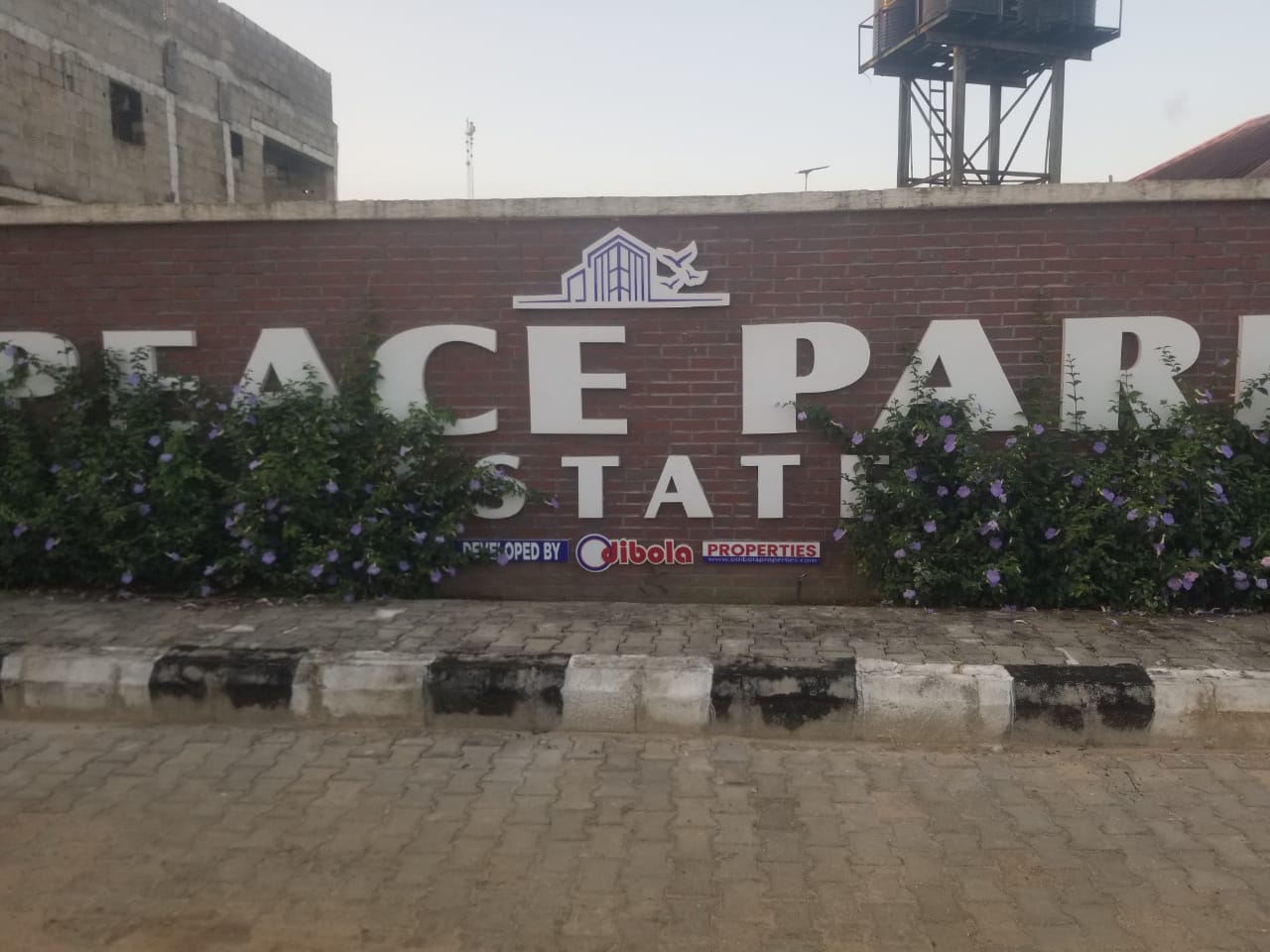
The Amaewhule family of mbodo Aluu in Ikwerre Local Government Area of Rivers State has cautioned members of the public against entering into any land transaction involving a disputed property known as “Ada Oro Fam Land,” located behind the OPM Church along Airport Road.
The family, through its legal counsel, Barrister Ndubuisi Agumagu, issued the warning amid an ongoing legal dispute over the ownership and control of the property, which is said to comprise more than 900 plots of land.
The matter is currently before the Isiokpo High Court of Rivers State in a suit numbered IHC/246/CS/2026, presided over by Justice Sobere Biambo.
The claimants in the suit include Chief Green Amaewhule and others, while Fabulous Amaewhule and Odibola Properties are listed among the respondents.
Counsel to the Amaewhule family, Barr Ndubuisi Agumagu, advised prospective land buyers and members of the public to exercise caution and refrain from purchasing any portion of the disputed property pending the determination of the case by the court.
According to the legal counsel, the property is a family estate belonging collectively to the Amaewhule family, and no individual member of the family has the authority to unilaterally dispose of portions of the land.
The counsel specifically maintained that Fabulous Amaewhule, one of the respondents in the suit, does not have the legitimate authority, according to the family’s position before the court, to sell portions of the disputed property.
The family further warned that anyone who proceeds to purchase land from the respondents while the matter remains before the court would be doing so at their own risk.
It stressed that such buyers could potentially lose their investments should the court eventually deliver judgment against the validity of the transactions.
The legal team said the warning became necessary to prevent unsuspecting members of the public from committing their resources to a property whose ownership and right of disposition are currently the subject of judicial determination.
The family also urged prospective investors, developers and land buyers to conduct proper legal inquiries and obtain independent verification of the status of the property before committing funds to any transaction relating to it.
The Amaewhule family said its position was intended to protect members of the public from possible financial losses and further legal complications while the case remains sub judice, stressing that interested parties should await the final determination of the court.
Akujobi Amadi
-

 Niger Delta2 hours ago
C’River, NUJ Pay Tribute To Late Guardian Editor
-

 Niger Delta2 hours ago
Diri Restates Stance On Lagos-Calabar Coastal Highway
-

 News4 hours ago
NDLEA Recovers Tons Of Illicit Drug Consignments In Nine States
-

 Opinion2 hours ago
Checking Voter Apathy In Nigeria’s Electoral Process
-

 Oil & Energy3 hours ago
S&P Global Warns Hormuz Energy Shock Could Become A Global Food Crisis
-

 Oil & Energy3 hours ago
Gas Reserves Hit 215 Trillion Cubic Feet
-

 News4 hours ago
Rivers Community Raises Alarm Over Alleged Security Invasion
-

 Niger Delta3 hours ago
AKSG Concludes Plans To Station Naval Base At Ibeno Creek