
Business
Reactions Trail CBN’s Decision To Redesign Naira

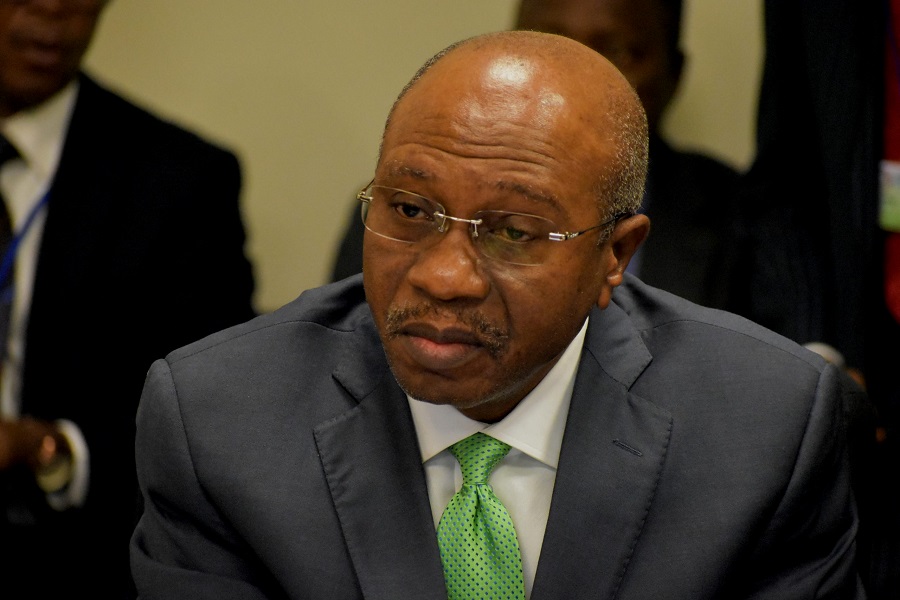
Stakeholders in the Nigerian economy, including the Civil Society advocacy group, have reacted to the plan by the Central Bank of Nigeria (CBN) to redesign the Naira.
They stated that the CBN’s plan to redesign 200, 500 and 1,000 naira notes is not an economic priority for the country as at the moment, considering the current challenges facing the economy.
A Public Affairs analyst, Mr Tomkiri Bestman, in reaction to the plan, noted that it was targeted to mop-up exceess cash and fake currencies in the system.
Speaking in an interview at the Port Harcourt International Airport, Bestman noted that the redesigning of the naira was long over due, saying that it was over 20 years the last time naira was redesigned.
“This was supposed to be done every five years, but it has taken a longtime now. The implication is that so much cash will be withdrawn from circulation, and will be held up with the Central Bank, and many that have built dump in their homes where they kept billions of naira will not have it easy.
“I think this will affect the politicians more, especially those that have stolen our money. Don’t be surprised that very soon, you will be hearing how money is being dumped here and there, if the CBN will do their thorough job”, he said.
Meanwhile, the Executive Director, Civil Society Legislative Advocacy Center (CISLAC), Auwal Musa, said the redesigning of the naira is not the priority of Nigeria’s economy at the moment.
Musa, who disclosed this in a statement made available to The Tide, noted that there are more pressing needs that the CBN ought to attend to, to set the economy on the path of revival.
He stated that Nigerians’ reactions to the announcement was proof that the decision was a misplaced priority on the part of the CBN.
According to him, the CBN should be more concerned with protecting foreign exchange reserves from external outflows and making forex available to the ordinary citizens who genuinely and legitimately need it, adding that the huge blow to foreign direct investment was tantamount to the inability of the CBN to do its job effectively
”Firstly, the CBN’s decision to redesign and reissue new 200, 500 and 1000 notes is not an economic priority and barely a solution to addressing Nigeria’s poor monetary policy challenges and growing economic woes.
“Especially at a time when the country is grappling with huge fiscal deficits, a free fall of the naira, soaring inflation rates, multiple forex rates and rising borrowing costs.
“The reasons for this decision seem no different from those given for the forex demand management strategy which resulted in a non-satisfactory conclusion as the artificially low exchange rate failed to be as reflective of the market as possible to improve supply, but this time it only threatens damning economic consequences for Nigerians.
“The public perception that this decision holds no value proposition for the economy reiterates the tendency of the CBN to be distracted from fulfilling priority statutory obligations.
“Various comments and responses from concerned Nigerians show that a large number of Nigerians are worried about the misplacement of priorities of the apex bank to make such a decision that comes with possibly huge logistics costs and avoidable dislocations to small businesses, most of which are in the informal sector”, he stated.
The CISLAC boss also agreed that CBN’s macro-economic policies had brought nothing but ‘untold hardship’ on the country’s economy, consequently affecting Nigerians negatively.
By: Corlins Walter



Cornerstone of Financial Services
A survey of more than 1 000 global finance leaders undertaken by digital payment network Ripple shows that 72% of respondents believe they need to offer a digital asset solution to remain competitive.
According to Ripple, leaders from the banking, fintech, corporate and asset management sector have made it clear that the “digital asset revolution is happening now”.
“Digital assets are quickly becoming a cornerstone of financial services, underpinned by progressive regulation, growing interest from Tier-1 banks, a steady consumer shift from banks to fintech providers, and booming stablecoin adoption,” Ripple says.
The survey was conducted in early 2026 and the findings released in March.
Stablecoin Boon or Bane?
Ripple has experienced significant success in the stablecoin sector since launching its Ripple USD (RLUSD) stablecoin in 2024.
With a market cap of $1.56 billion, it is considered a major regulated player in the market.
No doubt the platform was pleased to learn through its own survey that financial leaders were most bullish about stablecoins.
Roughly three-quarters of respondents believed they could boost cash-flow efficiency and unlock trapped working capital.
Ripple noted that finance leaders were thinking about stablecoins as more than “just a new way to execute payments”; instead, they viewed them as effective tools for treasury management.
In March 2026, Ripple began testing a new trade finance model built around RLUSD in a bid to increase the speed of cross-border payments.
The pilot initiative, developed alongside supply chain finance company Unloq [https://unloq.com], is running on the XRP Ledger inside a testing framework developed by the Monetary Authority of Singapore.
The Asian city-state is one of the platform’s biggest growth markets.
The idea behind the project is to see whether stablecoin-based settlement can streamline trade finance, too often hampered by reliance on intermediaries and slow reconciliation.
The only potential drawback is that if the initiative takes off, the Ripple to USD price could be negatively affected.
Ripple has always championed its native XRP token as a bridge asset, the “middleman” in the process of a financial institution turning dollars in the US into pounds in the UK, for example.
Ripple converts dollars into XRP and then back into pounds.
If RLUSD can do exactly the same thing, questions will be asked about XRP’s relevance.
That is a bridge Ripple will have to cross if it gets to that point.
Tokenisation Partners
Another interesting finding from Ripple’s survey is that most banks and asset managers are seeking tokenisation partners to help execute their strategies.
Some 89% of respondents said digital asset storage and custody were top priority. “Token servicing/lifecycle management also ranks highly for banks at 82%, while asset managers place greater emphasis on primary distribution at 80%,” Ripple found.
The survey also revealed that just more than half of fintechs and financial institutions want an infrastructure provider that can offer a “one-stop-shop solution”. This rose to 71% among corporate financial leaders.
Ripple attributes this to institutions and firms wanting uncomplicated, cohesive systems.
Infrastructure Rules
In its final analysis, Ripple says companies across the board are looking for partners and solutions that are “secure, compliant, battle-tested and that enable growth and execution”.
“The message is clear: infrastructure decisions made today will shape competitive positioning tomorrow.”
No surprise that this is precisely where Ripple is placing much of its focus.