
Nation
Beyond Partisan Opposition Of Boko Haram, Terror, National Security

When one of America’s most legendary civil rights advocates, Malcom X at the peak of his robust advocacy for good governance once said, ‘we owe our knowledge not to those who have agreed but to those who have deferred,” he was merely highlighting the import of alternative views and solutions to human problems and challenges.
Indeed, it also underscores the dictum, none is a reservoir of knowledge and looking further inwards, a rehash of a popular Okrika proverb which says, “Bu bilema Mingi gborianga ani-boke” meaning, the tide that eventually submerges the mangrove rages from not a single source. Therefore, for any people or nation-state to conquer its environment, unshackle itself from lack of knowledge and provide the best in human enterprise and ingenuity that humanity itself can offer, it requires men and women with rare vision, patience and a ‘never-say-die’, spirit. These are those who find no limits to what humanity can achieve.
It is to such people, human civilization today owes most accomplishments by way of inventions and myth breaking. It is to those rare human minds that society owes gratitude for finding answers to most of human needs that seemed impracticable.
These are the pacesetters, inventors and opposition voices who at one time or another preferred different approaches to getting things done and who at moments of seemingly impossible search for the hitherto unknown or little-known, tarry on as positive non-conformists or simply unusuals. But in their creative unusualness emerged most of the inventions society today do enjoy, in science, technology and even politics.
Thomas Edison, the man credited with the invention of the electric bulb among others was unrelenting in his resilience in search for workable clues and answers. That was at a time; many thought that electric bulb would not add any extra value to human life. He was mocked, derided and despised but the positive deviant in him urged him on and not even 250,000 failed attempts as success could sway his resolve. Today, the value of the electric bulb is for all to behold.
As in science and technology so it is in politics, social engineering and indeed governance. In fact, Malcolm X’s theory was meant to engineer in the main, positive opposition that at all times, offers alternative view to societal notions. It is not merely for opposition sake. The main expectation instead is for such opposition to provide alternative views to existing issues urgently demanding societal appraisal and reappraisal.
With such pedigree, the term opposition no longer becomes individualised or institutionalized but a pendulum that swings around quality alternatives to human endeavours on trial. This means, in a country like Nigeria, should there exist a potent opposition built on ideology, not individuals and clicks, nationalism not the familiar desperation for political power and selflessness not the familiar do-or-die posture of being driven to action not by intellect or reason but by desires and appetites, no single political party should govern uninterrupted approval for more than 13 year. It is either that the opposition is content being opposition endlessly or it does not have viable alternatives so can’t provide what it lacks in viable ideas. It is either that the opposition is ethno-religious in character or too regional to source such highly needed national alternatives or it simply lacks the pedigree, intellectual property or the political push to drive such alternative views for the proper understanding and indeed acceptance of the ordinary voter.
Or worst still, may be, the opposition does not meet the expectations of the electorate as a viable alternative, therefore, the voter simply feels safer sticking with the known than the unknown. One of these or all, sum-up the picture of Nigeria’s leading political opposition which rather than work hard to be seen as a viable bank of better alternatives, spends ample time in vain and uninspiring criticism, without providing any meaningful options for societal good.
Nigeria’s supposed leading opposition, the Action Congress of Nigeria (ACN) is one example that conjures this horrible picture and still content that it lacks the wherewithal, integrity and reach to provide a national alternative yet seems desperate to lose its opposition leadership to an even more unwieldy, desperate, power hungry, horribly ambitious and intellectually no better political drivers, hopeful to rest power from a single political party which it wants to make the electorate believe Nigerians do not deserve.
To achieve that tall dream, the ACN and its many disunited, uncoordinated and desperate merger partners have been busy badmouthing virtually any and every government policy, programme or action without sitting back to weigh the implications of their vituperations, the effectiveness of their criticisms and more importantly the measure of attitudinal change their views have effected among Nigerians towards actualising a displacement of the status quo.
Among others, its ever squinting views on Boko Haram, national security and war on terror appear to many, a mixed bundle of confused, directionless outburst, seemingly voiced without proper thinking or simply voiced for criticism sake not bothered about the national security implication of such view-points.
After the United nations (UN) House bombing, in Abuja, among many others last year; the ACN blamed the Federal government for a lack of tactical resolve, dependable intelligence gathering ingenuity and short supply of inspiring political leadership as responsible for the thriving profile of the Boko Haram. It did not suggest any which better way it would have handled the situation, were it in power.
Early this year, when Boko Haram terrorists attacked Christian places of worship, parks and markets with high Igbo ethnic nationality casualties, raising national concerns for likely reprisals, ACN merely criticised the attacks but refused to call it a terrorist siege. It did not suggest which better way it would have fought the war except blaming the ruling government of indecisiveness in tackling insecurity in the land.
Last month, when irked by the increasing spate of terror attacks in key Northern cities, including Kano, Jos and Maiduguru, in which several were killed and public and private property destroyed, Federal Government opted to consider the terror siege as a war on the Nigerian state, the ACN again criticised any likely military force, but did not say what alternative was left.
Curiously, at the peak hours of the merger talks with the Gen Muhammadu Buhari-owned Conference for Progressive Change (CPC) with just a state, in control against others’ with 12 as soon as Northern political elements started the clamour for amnesty for Boko Haram, apparently moved by same dubious political considerations, the ACN quickly jumped at it in support, without suggesting what government must do for victims of the protracted Boko Maram terrorist siege. It was merely in support of Boko Haram amnesty without tinkering where funds would be sourced to finance such unsolicited amnesty, from Boko Haram perspective.
And only last week, when, as many as between 70 and 100 police officers on official duty in search of an ethnic militia cult leaders in Nasarawa State were ambushed and killed, forcing President Goodluck Jonathan to cancel his planned trip to Namibia after cutting-short his working visit to South Africa to be briefed on the security situation, all, the ACN was quoted as saying was to warn the Federal government against plans to impose a state of emergency in many Northern states of Nigeria. No suggestions on what government should have done to stem the orgy of violence and senseless killings, except the known grandstanding to posture itself as a better lover of Northerners than the ruling Peoples Democratic Party (PDP) government.
To its disappointment, President Jonathan, last Tuesday, evening declared state of emergency in the three states of Adamawa, Yobe and Borno, but did not tamper with elected democratic structures as did former President Olusegun Obasanjo in similar circumstances, thus leaving ACN and others with little or nothing to feast on, in negative criticism.
But it seemed the ACN prepared its own opposition speech against the President’s expected broadcast long before the actual air-time when, it insinuated that the emergency rule was meant to dislocate democratic institutions, a suggestion that the nationwide broadcast later addressed to be untrue.
Even so, while, many well-meaning Nigerians; including governors of the affected states welcomed the Federal government’s decision as the most reasonable action to stem the reign of terror and reclaim Nigeria’s territory daily being annexed by foreign terrorists, with local connivance, the ACN stuck to its gun of unrestrained condemnation without offering alternative.
A week earlier, after spirited clashes between the terrorists and armed security men under the aegis of the Multinational Task Force on boarder surveillance in Baga, Borno State left several terrorists dead, the ACN in a statement had invited the International Criminal Court to charge the Nigeria defence institutions and of course, government with war crimes. There, again it made no viable suggestions on how to check the terrorists.
This is not the kind of opposition that can be seen as an alternative to the ruling party’s. It is instead one that makes the PDP, “the devil Nigerians know and are willing to stick to, than the self imposed angels Nigerians are still unsure to see. ACN and others in their emerging merger plans must present a better and more convincing manifesto that can make them national alternatives, not to shore-up as a band of shakeholders with shared political blocks to superintend and recoup such investments.
My Agony is that up till now, opposition politicians have not only failed to show character, drive and conviction as worthy alternative to the ruling government, they have made Nigeria the only thriving democracy where, government and opposition do not ever enjoy bi-partisanship even, on matters of national security, threatened by terrorists’ siege.
Some even say, many in their ranks could go the whole hug to sabotaging government efforts, if only to ensure their negative predictions not necessarily with a better opposite come true. That is not how politics should be played. National security should stand far above political sentiments and partisan adventurism. Period.



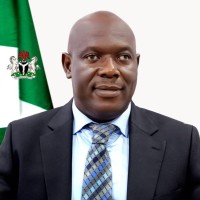
The Hydrocarbon Pollution Remediation Project (HYPREP) has commemorated the 15th anniversary of the release of the United Nations Environment Programme (UNEP) Environmental Assessment Report on Ogoniland, reaffirming its commitment to restoring the environment and improving the livelihoods of affected communities.
In a statement signed by the Project Coordinator, Prof Nenibarini Zabbey, to commemorate the anniversary, HYPREP described the anniversary as a significant milestone in Nigeria’s environmental restoration efforts, noting that the project has made remarkable progress in implementing the recommendations of the landmark UNEP report released on August 4, 2011.
The UNEP report had revealed extensive oil pollution across Ogoniland, severe environmental degradation, and serious public health risks resulting from decades of petroleum operations. It also recommended an initial $1 billion fund to commence the cleanup of the affected communities.
According to HYPREP, the Federal Government formally launched the Ogoni clean-up in 2016, while the Project Coordination Office was established in 2017 to drive the implementation of UNEP’s recommendations.
Zabbey said the current administration has continued to prioritise the project under the Renewed Hope Agenda.
Providing an update on the cleanup, the Project Coordinator disclosed that 30 of the 65 contaminated sites identified by UNEP have been fully remediated, while work is ongoing at several medium- and high-risk locations. It also stated that more than 1.5 million mangrove seedlings have been planted as part of what it described as the world’s largest restoration of oil-degraded mangroves, with over 1,000 hectares of shoreline already rehabilitated.
Zabbey further revealed that 49 Ogoni communities have been connected to potable water schemes through multiple water projects and booster stations aimed at providing safe drinking water across the region.
In the health sector, he said the 100-bed Ogoni Specialist Hospital in Kpite and the 43-bed Cottage Hospital in Buan are nearing completion, adding that several existing health facilities have been upgraded with modern medical equipment, while five ambulances have been donated to improve emergency healthcare services. The Project Coordinator also disclosed that a three-year human health biomonitoring study is being conducted in collaboration with the World Health Organization’s International Agency for Research on Cancer (IARC).
On economic empowerment, Zabbey stated that the Project has created more than 8,000 direct jobs and trained thousands of Ogoni youths and women in various vocational and technical skills, including software development, cybersecurity, aviation, commercial diving, seafaring, mechatronics, and creative arts. The project also reported awarding scholarships to more than 1,000 students, providing grants to small businesses, and supporting persons living with special needs through skills acquisition programmes.
The statement further highlighted ongoing legacy projects, including the Ogoni Power Project and the Centre of Excellence for Environmental Restoration, which it said is about 96 per cent complete. HYPREP also welcomed the recent designation of the Ogoni Wetland as a Ramsar Site of International Importance and pledged to continue promoting biodiversity conservation and sustainable management of the ecosystem.
Marking the anniversary, Zabbey said the progress achieved over the past 15 years demonstrates the collective commitment of government, development partners, stakeholders, and local communities to restoring Ogoniland. He called for renewed collaboration to sustain the cleanup effort, promote environmental sustainability, and support the long-term development of the region. 3
-

 News2 days ago
RSG Targets Nine Million Residents in Mosquito Net Distribution Campaign
-

 Oil & Energy1 day ago
Aiyedatiwa Signs New Electricity Bill
-

 Oil & Energy1 day ago
NLNG Commissions Research And Innovation Centre In RSU
-

 Maritime1 day ago
Marine Minister Commends President Tinubu On NPERA Bill Assent
-

 News2 days ago
KenPoly Holds Eight Convocations, August 29
-

 News2 days ago
RSG Begins Another Phase of Projects Commissioning Today
-

 News2 days ago
RMAFC Completes Revenue Sharing Review, Proposes New Pay
-

 Maritime1 day ago
NAGAFF Petitions IGP Over Alleged Maritime Police Harassment